Table of contents
Pakistan holds a special place in Sikh history. Guru Nanak, the founder of Sikhism, was born here, spent his final years here and is remembered at shrines across Punjab. For Sikhs around the world, visiting the gurdwaras of Pakistan is the journey of a lifetime. For other travellers, these sites offer a moving window into a shared past and some of the finest religious architecture in the country.
Although our own work is in the mountains of the north, many of our guests ask about these sites, and one of the most important stands right beside the road we take from Islamabad to the Karakoram. This guide introduces the major gurdwaras in Pakistan, where they are and what to know before you go.
Why Are There So Many Gurdwaras in Pakistan?
Sikhism began in Punjab in the late fifteenth century, long before the region was divided between India and Pakistan in 1947. Guru Nanak was born in 1469 in a village west of Lahore. Several of the later Gurus lived, taught and travelled in what is now Pakistani Punjab, and the Sikh Empire of Maharaja Ranjit Singh was ruled from Lahore in the early nineteenth century.
As a result, Pakistan has well over a hundred historic gurdwaras. Many were left without congregations after Partition, but the most significant have been restored and are open to pilgrims and visitors. They are managed by the Evacuee Trust Property Board together with the Pakistan Sikh Gurdwara Prabandhak Committee.
The Most Important Gurdwaras in Pakistan
1. Gurdwara Janam Asthan, Nankana Sahib
Nankana Sahib is the birthplace of Guru Nanak and the holiest Sikh site in Pakistan. The town lies about 75 kilometres west of Lahore and takes roughly an hour and a half to reach by road.
Gurdwara Janam Asthan stands on the spot where Guru Nanak is believed to have been born in 1469. The complex has a large courtyard, a sacred pool and a gilded sanctum. Several other gurdwaras in the town mark events from his childhood, so allow at least half a day. The largest gathering of the year takes place here for Guru Nanak Gurpurab, which usually falls in November.
2. Gurdwara Darbar Sahib, Kartarpur
Kartarpur, in the Narowal district close to the Indian border, is where Guru Nanak settled and spent the last 18 years of his life. He founded a farming community here, and it is where he died in 1539.
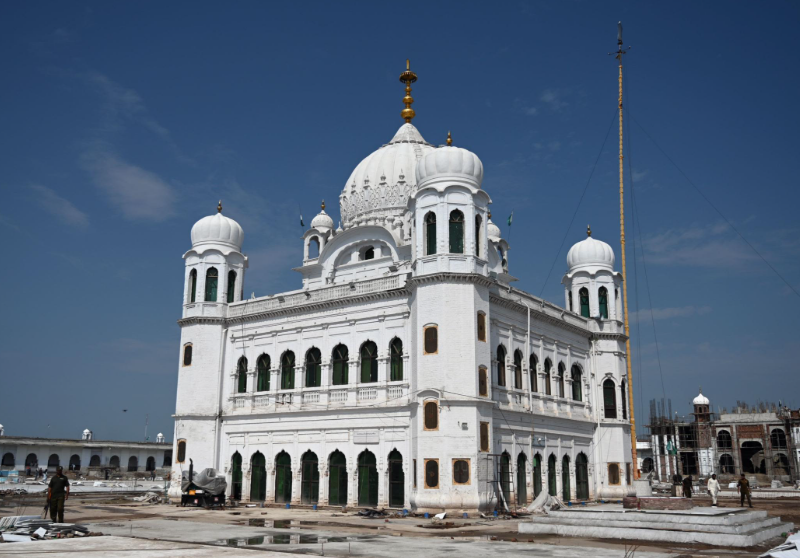
The white domed gurdwara sits among green fields beside the Ravi River. In November 2019 the Kartarpur Corridor was opened to allow pilgrims from India to cross directly to the shrine without a visa. The complex was greatly expanded at that time and is now one of the largest gurdwara sites in the world. Travellers already in Pakistan can visit by road from Lahore in about two and a half hours. Because the corridor’s operation depends on relations between the two countries, pilgrims coming from India should confirm the current status before planning.
3. Gurdwara Panja Sahib, Hasan Abdal
Panja Sahib stands in the town of Hasan Abdal, around 45 kilometres northwest of Islamabad. It is named after a handprint in a boulder that is believed to be that of Guru Nanak. According to tradition, he stopped a rock rolled down the hillside towards him with his open hand.
The gurdwara is built around a clear spring fed pool, and the stone with the handprint sits at the water’s edge. Thousands of pilgrims gather here every April for Vaisakhi.
Hasan Abdal lies at the start of the motorway that leads north towards the Karakoram Highway. For travellers heading to Hunza, Skardu or K2, it is the easiest gurdwara in Pakistan to visit, and a stop of an hour fits comfortably into the first morning of the drive.
4. Gurdwara Dera Sahib, Lahore
Dera Sahib is located beside Lahore Fort and the Badshahi Mosque, in the historic heart of the city. It marks the place where Guru Arjan, the fifth Guru, was martyred in 1606.
Next to it stands the Samadhi of Ranjit Singh, the memorial to the founder of the Sikh Empire. Together with the fort and the mosque, these buildings make this corner of Lahore one of the richest historical sites in South Asia, and all four can be visited in a single morning.
5. Gurdwara Sacha Sauda, Farooqabad
This gurdwara near Sheikhupura remembers a well known story from Guru Nanak’s youth. His father gave him money to make a profitable trade. Instead, he spent it feeding a group of hungry holy men and called it the true bargain, or sacha sauda. The episode is seen as the origin of langar, the free community kitchen found in every gurdwara. The building resembles a small fortress and is usually visited together with Nankana Sahib.
6. Gurdwara Rori Sahib, Eminabad
Near Gujranwala, Rori Sahib marks a place where Guru Nanak is said to have rested and meditated on a bed of pebbles. The handsome brick complex is set beside a large pool. Eminabad is also linked to the Guru’s account of the Mughal invasion under Babur.
7. Gurdwara Janam Asthan Guru Ram Das, Lahore
Hidden in the lanes of Chuna Mandi bazaar inside the Walled City of Lahore, this gurdwara marks the birthplace of Guru Ram Das, the fourth Guru and the founder of Amritsar. It is easy to combine with a walk through the old city.
Gurdwaras in Pakistan at a Glance
| Gurdwara | Location | Significance | Distance from nearest city |
|---|---|---|---|
| Janam Asthan | Nankana Sahib | Birthplace of Guru Nanak | About 75 km from Lahore |
| Darbar Sahib | Kartarpur, Narowal | Where Guru Nanak spent his last years | About 120 km from Lahore |
| Panja Sahib | Hasan Abdal | Handprint of Guru Nanak | About 45 km from Islamabad |
| Dera Sahib | Lahore | Martyrdom of Guru Arjan | Central Lahore |
| Sacha Sauda | Farooqabad | Origin of langar | About 60 km from Lahore |
| Rori Sahib | Eminabad | Meditation site of Guru Nanak | About 60 km from Lahore |
| Janam Asthan Guru Ram Das | Lahore | Birthplace of the fourth Guru | Walled City of Lahore |
When to Visit
The cooler months from October to March are the most comfortable time to travel in Punjab. Summers are extremely hot, and July and August bring monsoon humidity.
The main festivals draw very large crowds and a wonderful atmosphere.
- Vaisakhi in mid April, centred on Panja Sahib
- The martyrdom day of Guru Arjan in June, at Dera Sahib
- The death anniversary of Maharaja Ranjit Singh in late June, in Lahore
- Guru Nanak Gurpurab in November, centred on Nankana Sahib
During these periods, special pilgrim visas are issued to large groups from India and elsewhere, and security around the shrines is tight. Independent visitors may find access easier outside festival dates.
Etiquette for Visiting a Gurdwara
Gurdwaras welcome people of every faith. A few simple rules apply to everyone.
- Cover your head. Scarves are usually available at the entrance if you do not have one.
- Remove your shoes and socks and wash your hands and feet before entering.
- Dress modestly, with shoulders and legs covered.
- Do not bring tobacco or alcohol onto the premises.
- Sit on the floor in the prayer hall, and avoid pointing your feet towards the holy book.
- Accept langar if offered. The free meal is served to all visitors, and everyone sits together as equals.
- Ask before taking photographs inside the prayer hall.
Practical Information for Visitors
Foreign visitors need a valid Pakistan visa. Sikh pilgrims often travel on a pilgrim visa arranged through recognised groups, while other travellers can visit on a tourist visa. Carry your passport, as identity checks are standard at the larger shrines.
Lahore is the natural base for Nankana Sahib, Kartarpur, Sacha Sauda and Eminabad, and Islamabad is the base for Panja Sahib. Three to four days are enough to see the main sites at an unhurried pace.
Frequently Asked Questions
How many gurdwaras are there in Pakistan?
Pakistan has well over a hundred historic gurdwaras. Only a small share of them are active today, and the major shrines described in this guide are regularly open to pilgrims and visitors.
Which is the most famous gurdwara in Pakistan?
Gurdwara Janam Asthan in Nankana Sahib, the birthplace of Guru Nanak, is the most important. Kartarpur and Panja Sahib are also widely revered.
Can non Sikhs visit gurdwaras in Pakistan?
Yes. Visitors of all faiths are welcome as long as they cover their heads, remove their shoes and behave respectfully.
Where is Nankana Sahib?
Nankana Sahib is in Punjab province, about 75 kilometres west of Lahore.
Which gurdwara is closest to Islamabad?
Gurdwara Panja Sahib in Hasan Abdal is about 45 kilometres from Islamabad and can be visited in half a day.
Heading North After Your Visit?
Many travellers pair a few days in Lahore and Islamabad with a journey into the mountains. If you would like to follow the gurdwaras of Punjab with Hunza, Skardu or a trek in the Karakoram, we can arrange the northern part of your trip and include a stop at Panja Sahib on the way. Get in touch with our team to talk through the options.
Last updated . Prices, dates and conditions can change, so confirm details with our team before booking.