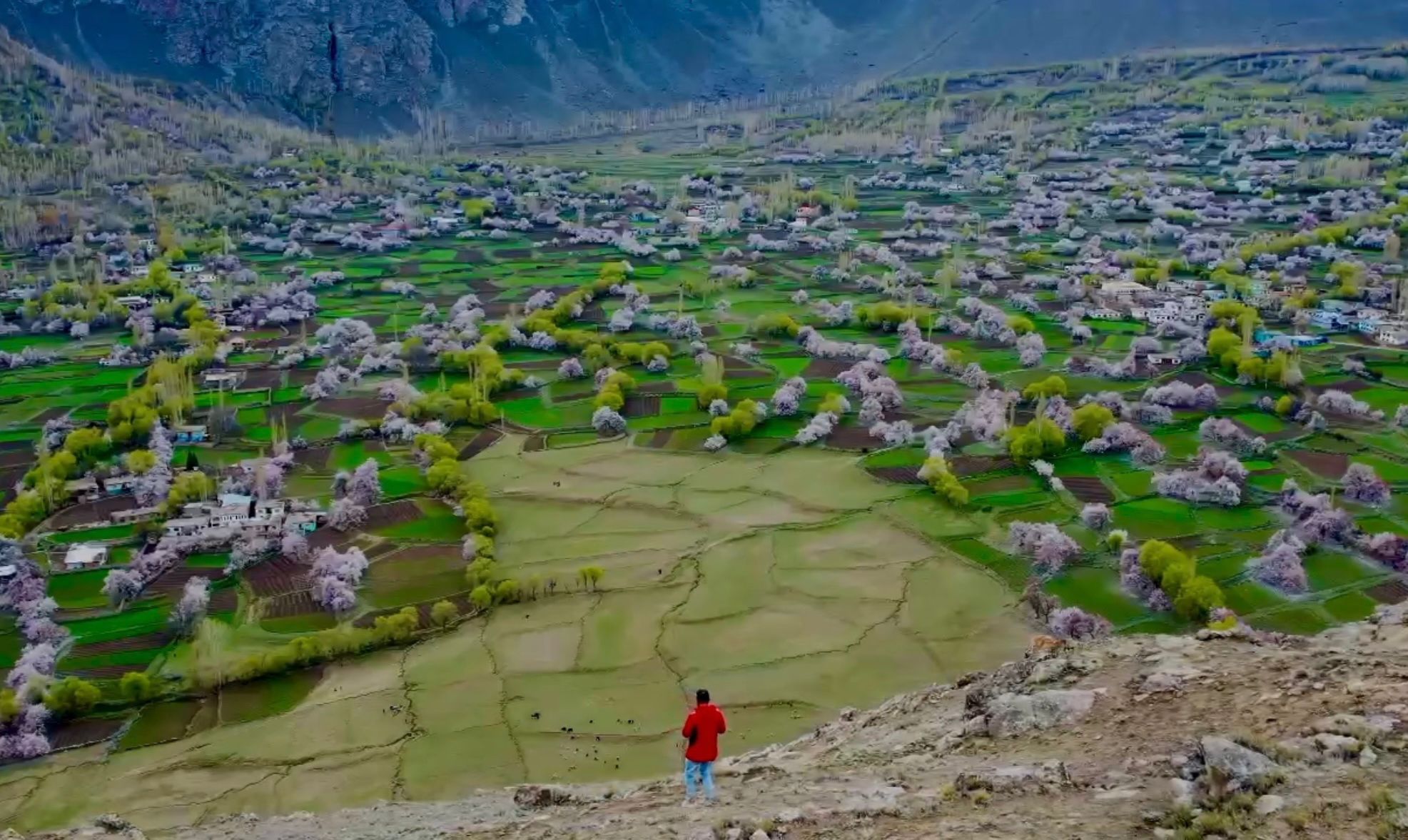
Spring arrives quietly in Gilgit Baltistan. One week the mountains are bare and the valleys still cold from winter. The next, thousands of cherry and apricot trees burst open, covering entire hillsides in pink and white, and the region becomes one of the most beautiful places on earth. These are the top places to visit in Gilgit Baltistan during spring, chosen by people who know these valleys and have watched them wake up from winter many times.
Gilgit Baltistan sits at the meeting point of three of the world's great mountain ranges: the Karakoram, the Himalayas and the Hindu Kush. It is home to five of the world's fourteen 8,000m peaks, including K2 at 8,611m, the world's second highest mountain. In summer it draws trekkers and mountaineers from every continent. In spring it draws a quieter, more curious traveller, one who wants colour and warmth and culture rather than altitude and ice. Spring in Gilgit Baltistan rewards that person enormously.
| Destination | Spring Peak | Best For |
|---|---|---|
| Hunza Valley | Late March to Mid-April Peak | Cherry blossom, forts, lakes |
| Skardu and Shigar | Late March to Late April Peak | Apricot blossom, desert, culture |
| Naltar Valley | Mid-April to Early May | Pine forests, alpine lakes |
| Khaplu Valley | Early to Late April | Blossom, fort, fewer crowds |
| Phander Valley | Late April to Early May | Wildflowers, turquoise lakes |
| Gilgit City | Mid-March to Early April | First blossoms, Kargah Buddha |
| Astore Valley | Late April to May | Remote scenery, Nanga Parbat views |
 01
01
Hunza Valley
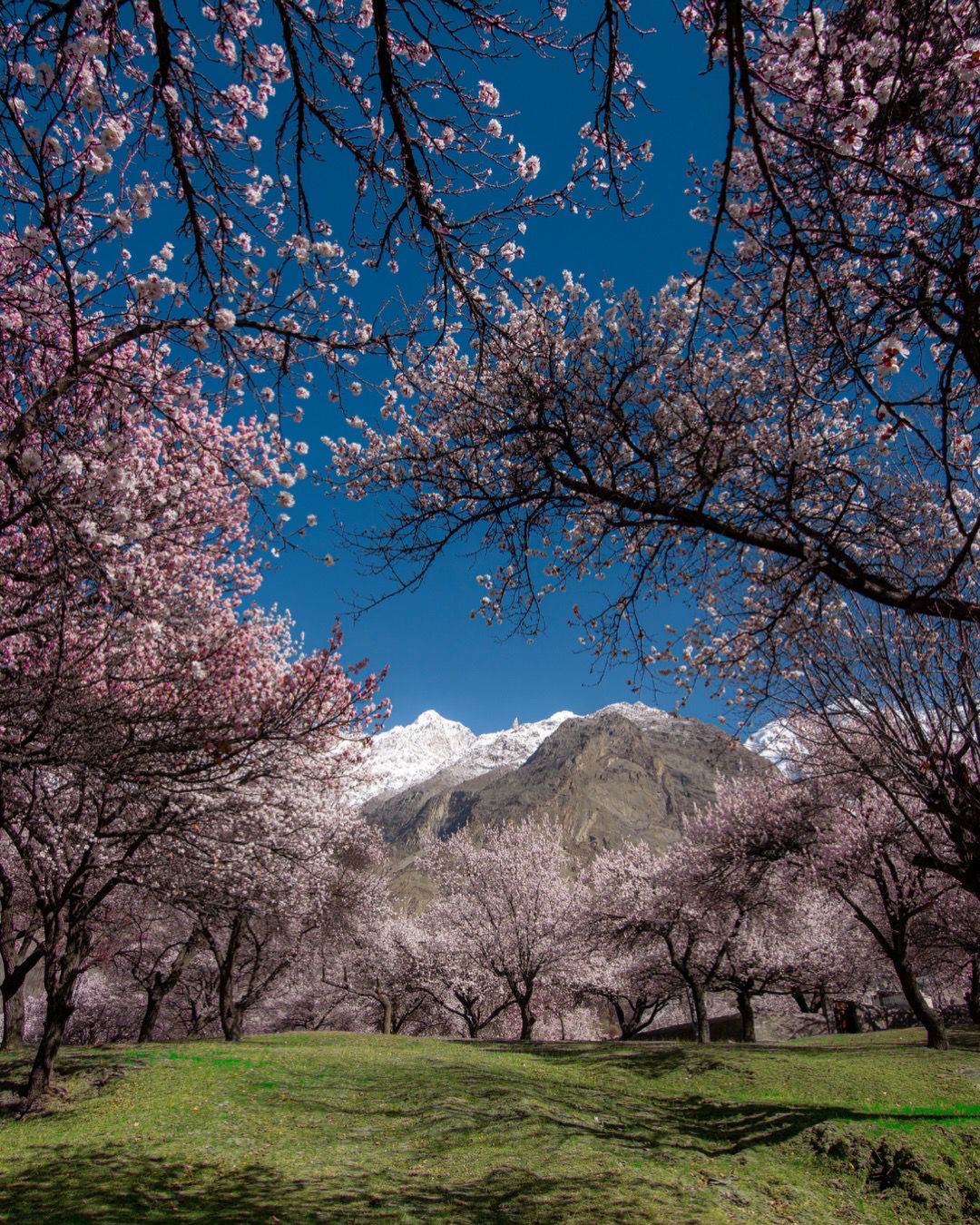
Best late March to mid-AprilHunza is the place most people picture when they think of spring in Gilgit Baltistan, and with good reason. The valley sits at around 2,438m and catches the blossom slightly earlier than Skardu. When the cherry trees around Karimabad come into full flower, with the 7,788m face of Rakaposhi rising behind them and Baltit Fort sitting above the orchards, it produces one of the most photographed landscapes in all of Pakistan.
The valley has a lot more to offer than photographs though. Altit Fort, which is over 900 years old and perched on a rocky crag above the Hunza River, is among the finest historical sites in the entire Karakoram. Attabad Lake, a turquoise body of water created by a massive landslide in 2010, is especially beautiful in spring when the surrounding cliffs are still snow dusted and the light has that cool clarity that only comes before the summer heat arrives. The road over the lake by tunnel opens views that feel almost unreal.
Higher up in the valley, Eagle's Nest above Duikar village gives a sunrise view over the entire Hunza valley that many experienced travellers count as the finest viewpoint in Pakistan. Getting there before dawn, when the valley is still dark and the peaks catch the first orange light, is something worth planning a whole trip around.
 02
02
Skardu and Shigar Valley
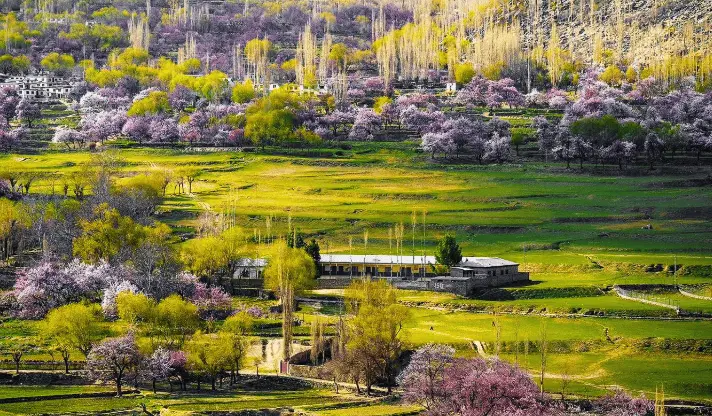
Best late March to late AprilSkardu is the capital of Baltistan and the launching point for some of the greatest mountain expeditions in history. In spring it becomes something else entirely. The wide valley fills with blossom across orchards of cherry, apricot, almond, apple and pear, sometimes six or seven varieties blooming at the same time. The sheer scale of it is different from Hunza. Where Hunza concentrates its blossom around its villages and forts, Skardu spreads it across a vast open valley where the Indus runs wide and the mountains rise dramatically on every side.
The villages surrounding Skardu city are where the blossom is at its most intimate and unhurried. Chunda Valley, a short drive from the city centre, is one of the most beautiful blossom spots in all of Baltistan. The valley is narrow and green, with cherry and apricot orchards lining both sides of the stream, and the kind of quiet that has mostly disappeared from the more visited areas. Local families still work the land as their ancestors did and a spring walk through Chunda feels genuinely like stepping back in time. Sadpara village, on the road to the famous Sadpara Lake, is another place where the blossom comes early and covers the terraced fields in a way that is almost impossibly picturesque against the blue water of the lake beyond. The village of Kachura is equally rewarding, with orchards running right to the edge of the turquoise Upper Kachura Lake, creating one of the signature spring images of Skardu. Further out, the Basho Valley fills with wildflowers and early blossom in late March and is completely undiscovered by most visitors.
The most unusual spring experience around Skardu is the Katpana Cold Desert, where apricot and almond blossoms frame rolling golden sand dunes. Nowhere else in Pakistan or arguably on earth do you see a desert in spring blossom. It is genuinely surreal and worth a visit on its own.
Just 30 kilometres from Skardu, Shigar Valley is one of the finest spring destinations in Baltistan. The 17th-century Shigar Fort, beautifully restored by the Aga Khan Trust for Culture, sits among blooming apricot trees and has been converted into a boutique heritage hotel. Staying there during blossom season is one of the most memorable experiences in all of northern Pakistan. Read more in our dedicated guide to spring in Skardu.
Spring in Gilgit Baltistan is not one destination. It is a moving season. As the weeks pass, the blossom travels upward through the valleys, and if you follow it, you can be in full blossom for a month.
BOOK YOUR SPRING TOUR
Broad Peak Adventures runs private spring tours across Gilgit Baltistan, built around the best blossom windows. Local guides, private transport, real local hospitality.
Khaplu Valley
Best early to late AprilKhaplu is known as the Valley of Gardens and in spring you understand exactly why. The valley sits higher than Skardu, so its blossom comes about two weeks later, making it a natural extension of a spring trip that begins in the lower valleys. Cherry and apricot orchards line the narrow village paths and frame the stunning Khaplu Palace, a centuries-old fort restored into a heritage hotel that is one of the finest places to stay in the entire Karakoram.
The pace of Khaplu is different to Hunza or even Skardu. There are far fewer visitors and the valley retains a quiet, almost untouched character. Local farmers work their orchards without concern for cameras or crowds. Village life carries on in the ancient Balti way. Walking through the blossoming lanes of Khaplu in April, when the air carries the fragrance of apricot flowers and the peaks above are still white with winter snow, feels genuinely like stepping into another world.
Naltar Valley
Best mid-April to early MayNaltar is different from every other spring destination in this list. Where the valley floors of Hunza and Skardu are dominated by fruit tree orchards, Naltar's spring is a forest story. Dense pine and birch forests cover the hillsides and as the snow retreats through April and May, wildflowers appear across the meadows in extraordinary variety. The three famous Naltar Lakes, known locally as Bashkiri, Satrangi and Naltar Lake, sit in a glacial basin at around 3,000m and take on colours that shift between turquoise, green and blue as the light changes through the day.
Naltar is also Pakistan's premier ski area in winter, which means it has better infrastructure than many remote valleys. The road is manageable by jeep and the valley is only 45 kilometres from Gilgit city, making it an easy two-day side trip from anywhere along the Karakoram Highway. In spring the skiing crowds are gone and the valley returns to its natural, remarkably peaceful self.
Phander Valley, Ghizer
Best late April to mid-MayPhander is Gilgit Baltistan's best kept secret and one of the most genuinely beautiful valleys in all of Pakistan. Known locally as Little Kashmir, the Phander Valley in the Ghizer District sits at around 2,900m in the westernmost part of Gilgit Baltistan, where the landscape shifts from the stark Karakoram desert to something greener, softer and more lush. Phander Lake is a stunning body of turquoise water in a wide meadow setting, surrounded by poplar trees that come into leaf in spring and pine-covered slopes that catch the afternoon light beautifully.
Visiting Phander in late April or early May puts you there just as the wildflowers begin and the crowds have not yet arrived. The road from Gilgit via the Ghizer Valley, following the Gilgit River through canyon after canyon, is one of the finest drives in the region. Festivals in the villages of Ghizer often coincide with spring and offer a cultural experience that is completely different from the Karakoram side of Gilgit Baltistan.
Gilgit City and Nagar Valley
Best mid-March to early AprilGilgit city is the first place in Gilgit Baltistan to blossom each spring. Sitting at a lower elevation than Hunza or Skardu, the trees around Gilgit begin to flower from mid-March, signalling the start of the season for the whole region. The city sits at the confluence of three rivers: the Indus, the Hunza and the Gilgit, and in spring the riverbanks lined with flowering trees and the dramatic backdrop of snow-covered peaks create a setting that most visitors underestimate.
The Kargah Buddha, an ancient rock carving estimated to be over 1,400 years old set into a cliff face outside the city, is a remarkable historical site that few international travellers know about. The Gilgit bazaar is one of the liveliest in the north, and in spring it fills with fresh apricots, dried fruit and the seasonal energy of a region coming back to life. Across the river, Nagar Valley offers dense apricot orchards with dramatic glacier views that rival anything in Hunza, with considerably fewer visitors.
Astore Valley and Fairy Meadows
Best late April to MayAstore Valley sits on the western edge of Gilgit Baltistan, between the Karakoram and the Himalayas, and it blooms late. By the time Hunza and Skardu have finished their blossom season, Astore is just beginning. The valley is less visited than the famous Karakoram destinations, which gives it a quietness and an authenticity that is harder to find in the more popular areas.
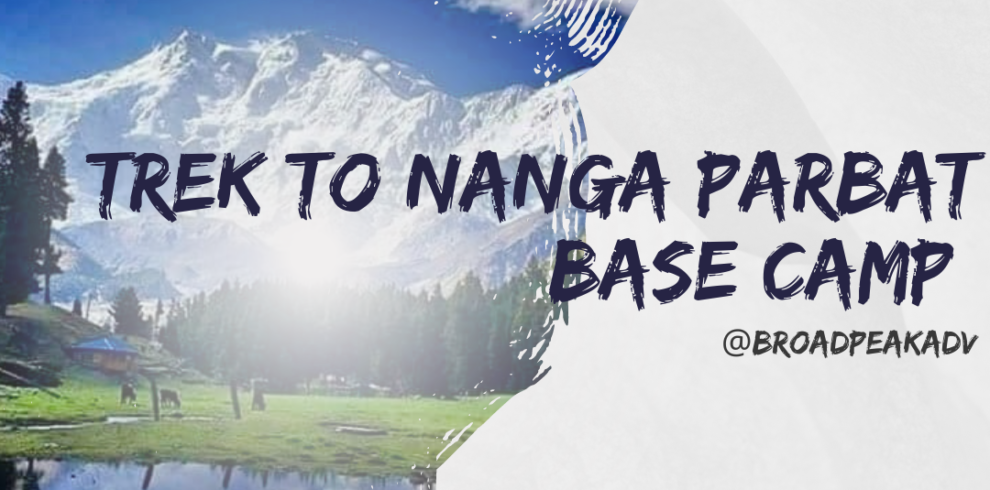
The main draw is Fairy Meadows, a legendary alpine clearing at around 3,300m on the slopes of Nanga Parbat, the 8,126m Killer Mountain. In late April and May, the meadow fills with spring wildflowers, the surrounding forest turns green and the enormous southern face of Nanga Parbat looms above. Waking up to sunrise on Nanga Parbat from Fairy Meadows is genuinely one of the most extraordinary mountain experiences available to any traveller. Our Nanga Parbat Base Camp Trek passes through Fairy Meadows on the way to the mountain.
Why Spring Is the Best Time to Visit Gilgit Baltistan
Most people who have been to Gilgit Baltistan in both summer and spring will tell you that spring is the better season, even if summer is when the big treks happen. The reasons are straightforward.
- Fewer crowds: summer is when the trekking season peaks and popular areas like Hunza get busy. In spring you share the landscape with almost no one
- The blossom: something that summer simply does not have. Six or seven tree species in simultaneous bloom against snow-capped peaks is a natural spectacle with no equivalent elsewhere in Asia
- The light: spring light in the Karakoram has a crystal clarity that comes from cool air and low humidity. Every peak looks closer, every colour more vivid
- The temperature: 10 to 18 degrees at valley level is warm enough to explore comfortably and cool enough to walk all day without exhaustion. Summer valley temperatures can reach 30 degrees and above
- The culture: spring coincides with Nowruz, the traditional new year celebrated across Gilgit Baltistan and cultural gatherings in many villages
- The accommodation: spring rates are significantly lower than summer peak season, and the best guesthouses and hotels are available without booking months in advance
The only thing spring cannot offer is access to the high passes. Deosai Plateau, Khunjerab Pass and most high-altitude trekking routes are still snowbound in March and April. But for cultural travel, blossom, heritage, lakes and valley walking, spring in Gilgit Baltistan is unmatched. For those who want both the blossom and the mountains, arriving in late April and staying through to June gives you the tail end of blossom season and the opening of the high routes.