Two of the world's greatest mountain ranges in one journey. The Nanga Parbat and Rakaposhi Base Camp Trek moves through the western Himalayas and the Karakoram in 14 days, connecting Fairy Meadows, the Rupal and Raikot flanks of the world's ninth highest peak, and the glaciated ridgeline below Rakaposhi, the 27th highest peak on earth.
Nanga Parbat stands at 8,125 metres on the western anchor of the Himalayan range. It rises 4,600 metres above the Indus Valley floor in one of the most dramatic vertical ascents found anywhere on earth. The trek to its base camp via Fairy Meadows is one of Pakistan's best-known mountain walks, passing through old-growth pine and fir forests before emerging at the broad alpine meadow that has become a landmark in its own right.
From there the route heads west into the Karakoram to Minapin village, the trailhead for the ascent to Rakaposhi Base Camp at 3,261 metres. Rakaposhi (7,788m) is renowned among mountaineers for its beauty as much as its height. The approach through the Minapin Glacier valley, past the summer settlement of Hapakun and across high moraines, offers some of the most varied trekking terrain in northern Pakistan.
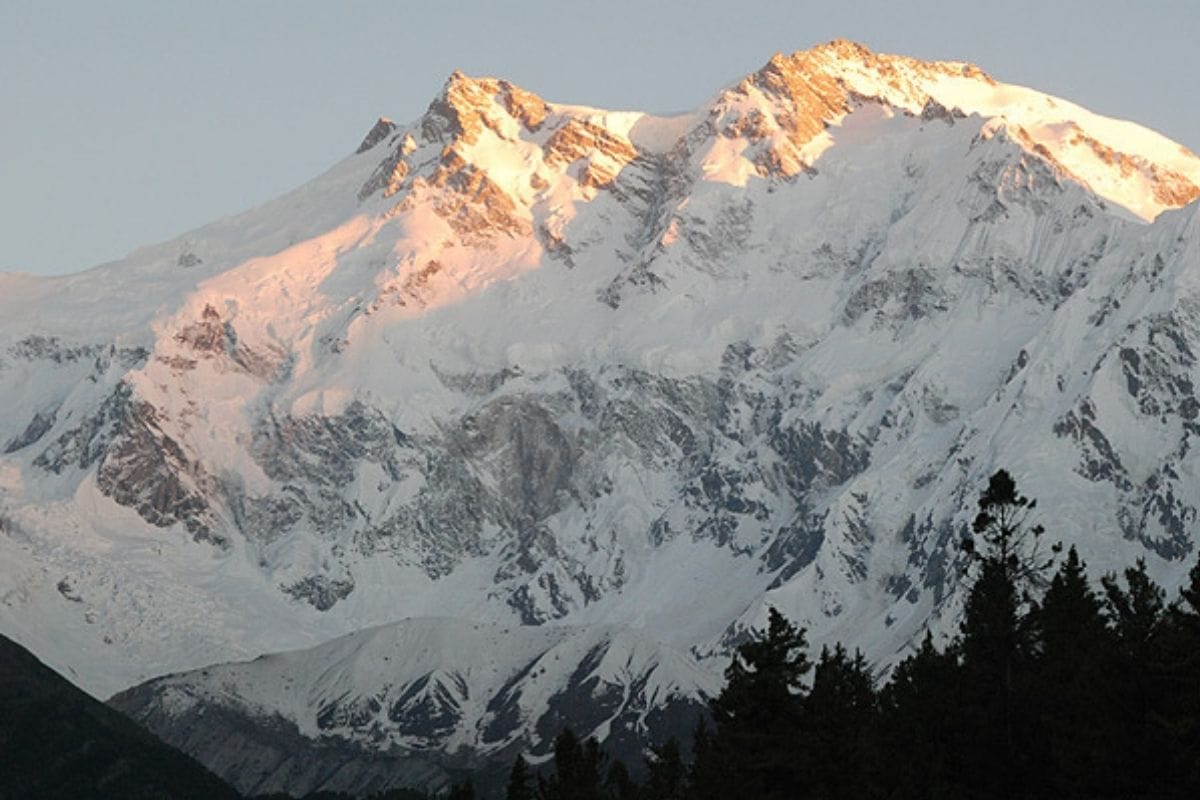
Nanga Parbat (8,125m) from Fairy Meadows, Gilgit-Baltistan
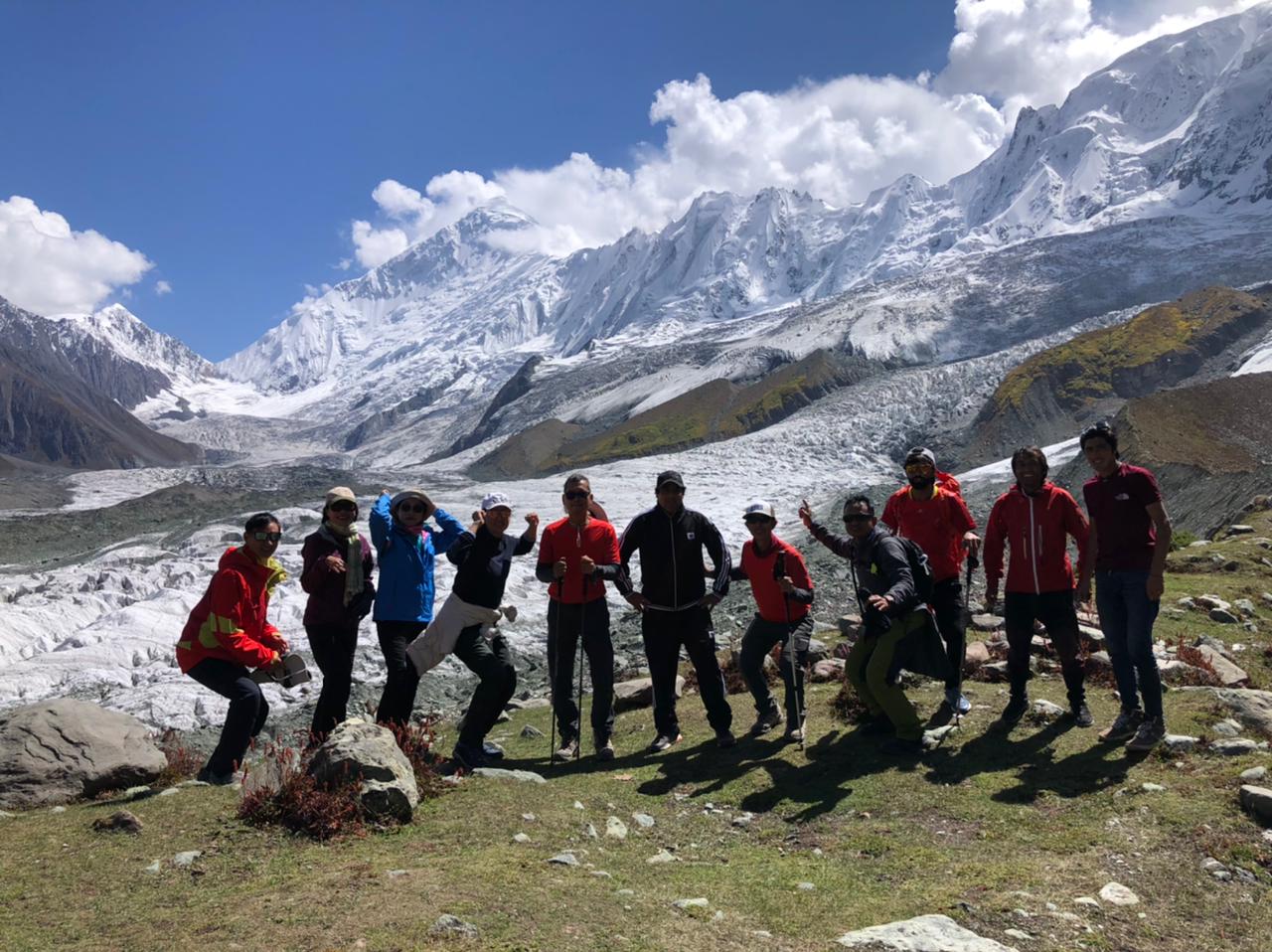
Rakaposhi (7,788m) above the Minapin Valley, Karakoram
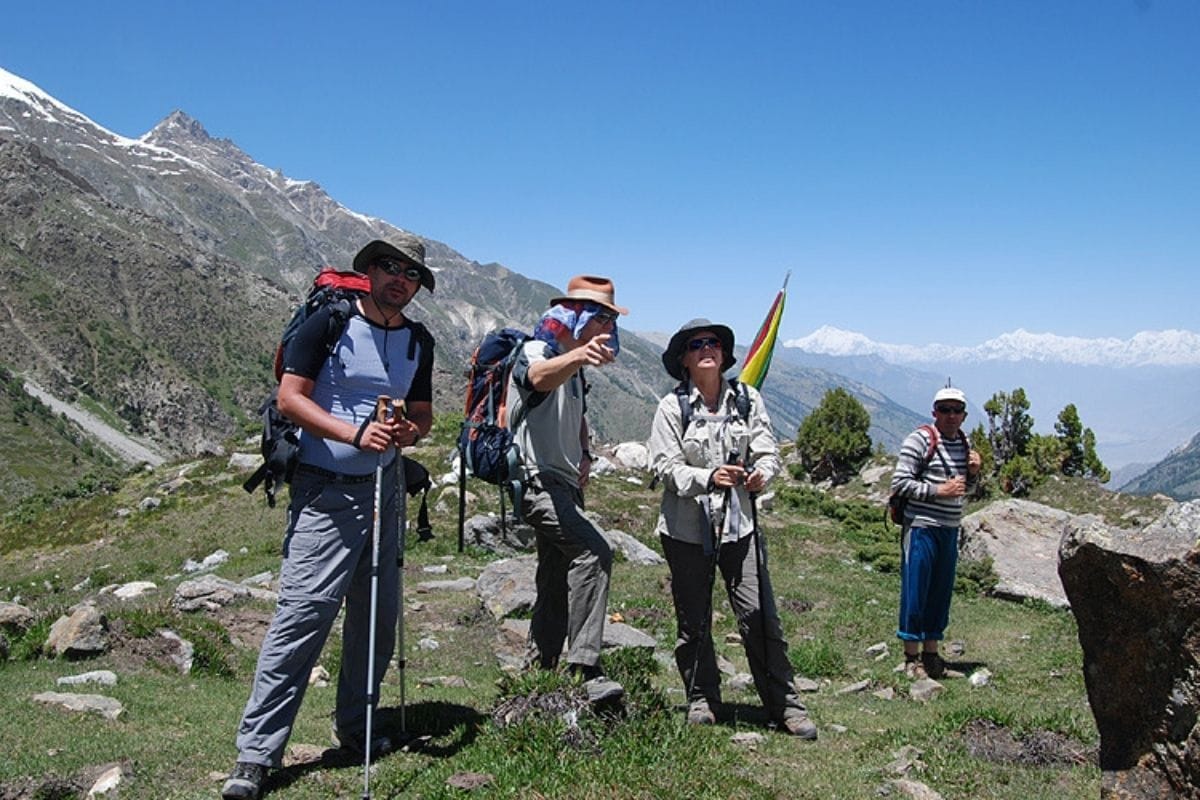
trail to Nanga Parbat Base Camp
Trek Highlights
The iconic alpine plateau at 3,306m with a direct view of Nanga Parbat's Raikot face — one of the most photographed mountain panoramas in Asia.
Reach the base of the world's ninth highest mountain at 3,967m. Stand beneath the Raikot face, where Hermann Buhl made history on 3 July 1953.
The Minapin Glacier approach leads to a high camp at 3,261m with sweeping views of the Rakaposhi-Diran ridge, one of the most beautiful mountain crests in the Karakoram.
Rest days in Hunza include a visit to Altit Fort (c.11th century), the oldest monument in Gilgit-Baltistan, with views across the Hunza River gorge to Rakaposhi.
This is the only accessible trek that crosses from the Himalayas into the Karakoram in a single itinerary, passing through both ranges in a fortnight.
Travel sections of the world's highest international road, with stops at the confluence of the Himalaya, Karakoram and Hindu Kush at Thalichi.
After dinner at Nanga Parbat Base Camp, we turned off every light. The Raikot face filled the sky above us. Nothing I had read about this place had prepared me for what it actually looks like at midnight.
Trek guest, September 2024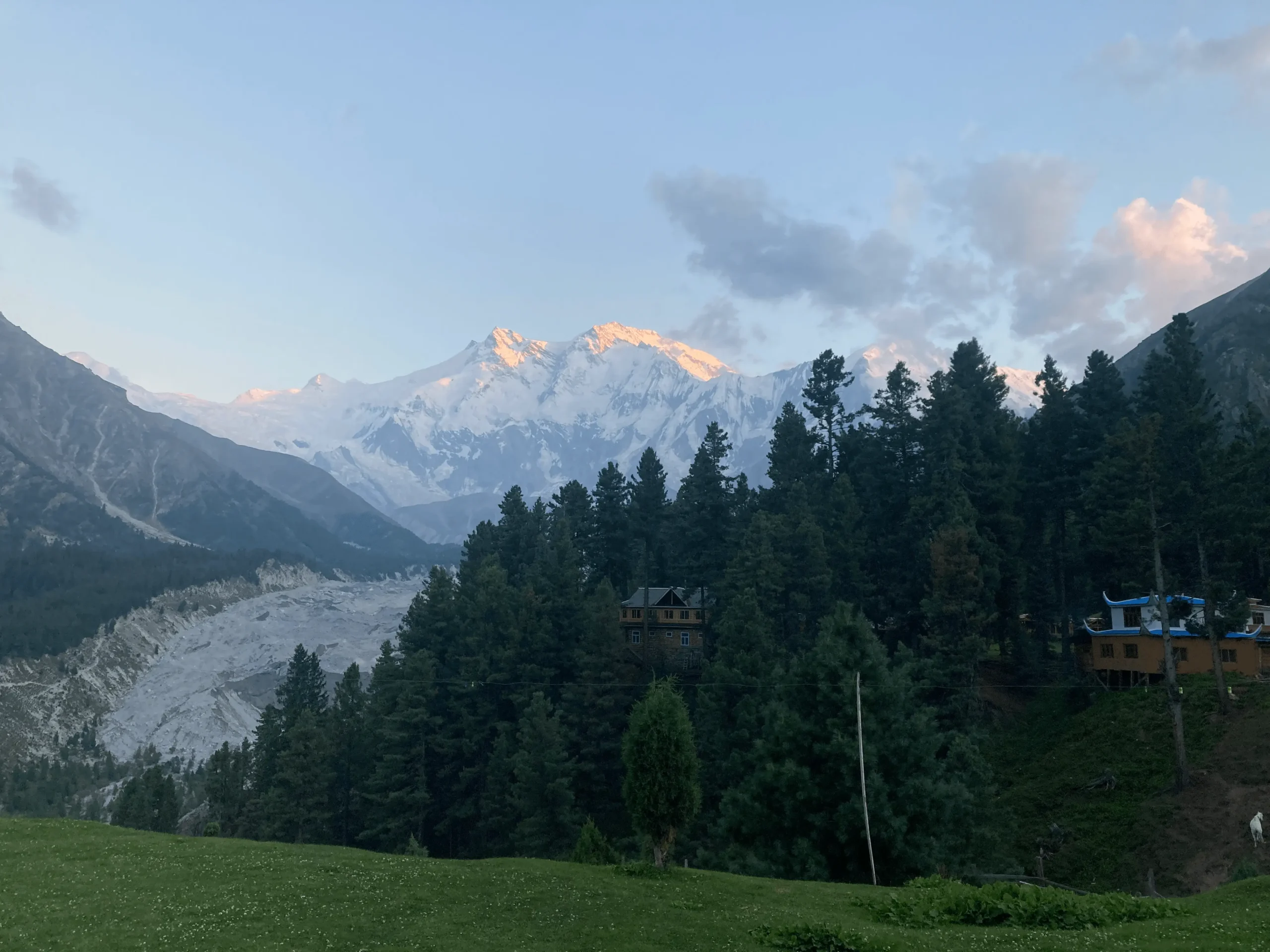
Nanga Parbat Base from Fairy Meadows
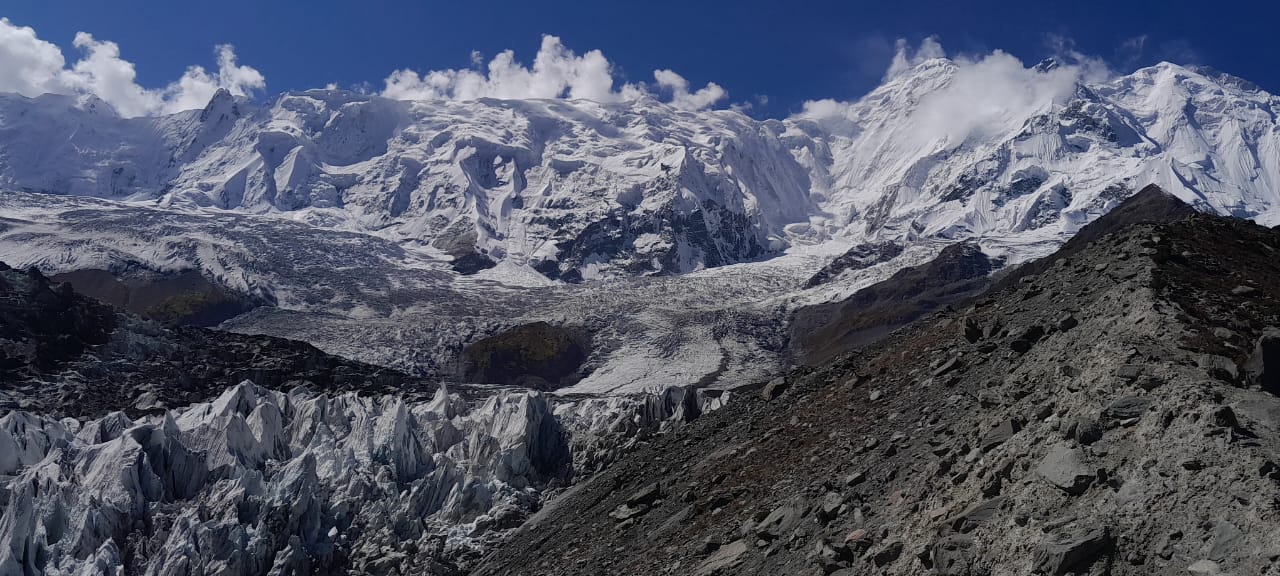
Rakaposhi (7,788m) dominating the northern skyline
Day-by-Day Itinerary
The 14-day itinerary below is the standard programme. A 15-day version with an extra acclimatisation day at Fairy Meadows, and a 16-day version including a Diran Peak Base Camp excursion, are also available.
Airport transfer and welcome briefing. Afternoon city tour: Faisal Mosque, Pakistan Monument, Lok Versa Museum, and the old bazaars of Rawalpindi. Your lead guide introduces the route over dinner.
Drive north through Mansehra and Naran to the Babusar Pass (4,173m), then descend to Chilas on the Indus. First views of the Nanga Parbat massif appear as you approach the valley.
Drive to Raikot Bridge, then jeep transfer to Tato village (15km). Begin the 2-3 hour trek through pine forest to Fairy Meadows. Nanga Parbat's Raikot face (the north face) comes into view on the final approach.
The trail to base camp passes through pine and fir forest along a glacial stream before opening across moraine to the Raikot Base Camp. Views encompass Nanga Parbat, Raikot Peak (7,070m) and Ganalo Peak (6,608m). Return to Fairy Meadows for the night.
Optional early-morning hike towards Camp 1, a steep 2-hour climb above the moraine with unobstructed views of the north face. Afternoon free at the meadow. Star photography session after dark.
Trek down to Tato village and drive west along the Karakoram Highway. Stop at Thalichi — the confluence point of the Himalaya, Karakoram and Hindu Kush ranges — for photography and tea. Continue to Minapin, trailhead for the Rakaposhi approach.
The trail from Minapin crosses the river to the true left bank of the Minapin Glacier and climbs steeply through switchbacks before easing across broad pastures. The full Rakaposhi-Diran ridge appears for the first time as you approach Hapakun.
Continue up through moraines onto the glacier margin. Rakaposhi Base Camp sits in a natural bowl with views of the Minapin Glacier icefall and the full south-west face of Rakaposhi. Afternoon walk around the camp.
Optional excursion towards Diran Peak (7,266m) base camp, with views across the Haramosh range. Return to Hapakun for the night.
Trek back to Minapin village and drive into the Hunza Valley, arriving at Karimabad with views of Rakaposhi, Ultar Sar and the terraced apricot orchards of the valley below Baltit Fort.
Full day in Karimabad. Visit Altit Fort, an 11th-century structure and the oldest monument in Gilgit-Baltistan, followed by 700-year-old Baltit Fort, the historic seat of the Hunza Mir. Optional cooking class in Burushaski cuisine.
Drive south through the Hunza Gorge with a stop at the turquoise Attabad Lake, formed in 2010. Continue to Gilgit for overnight rest before the return journey.
Morning flight to Islamabad, weather permitting. If flights are disrupted, the overland route via Karakoram Highway (8-9 hours) is the alternative. Evening free in Islamabad.
Transfer to Islamabad International Airport. Morning is free depending on your onward flight time. Farewell breakfast with the team.
What Is Included
- All accommodation — hotels in Islamabad, Chilas, Minapin, Gilgit and Hunza; huts at Fairy Meadows; camping at Hapakun and Rakaposhi Base Camp
- All meals throughout the trek from Day 1 dinner to Day 14 breakfast (full board)
- Expert English-speaking guide with mountain first-aid certification and 10+ years Karakoram experience
- Experienced cook and full porter support for all camping sections
- 4x4 jeep transfers — Raikot Bridge to Tato village; all regional ground transport
- All entry fees and liaison permissions for both trekking areas
- Group camping equipment — tents, kitchen equipment and dining shelter
- Gilgit-Islamabad flight (weather-dependent; road transfer as fallback at no extra cost)
- International flights to and from Islamabad
- Personal travel insurance (mandatory — must cover rescue at 4,000m+)
- Personal trekking equipment — sleeping bag rated to -15°C, trekking poles, boots
- Tips for guides and porters (customary; approximately $5-8 per day)
- Personal snacks and drinks beyond meals
Best Season to Trek
The Nanga Parbat and Rakaposhi Base Camp Trek is a summer season route. Both trails are accessible from May through October, with the most stable weather and clearest skies in June, July, August and September.
| Month | Weather | Trail Conditions | Crowds | Rating |
|---|---|---|---|---|
| May | Cool, variable | Open, some snow on passes | Low | Good |
| June | Clear, warm | Excellent | Moderate | Best |
| July | Hot at low altitude, clear high | Excellent | High | Best |
| August | Occasional cloud, warm | Excellent | High | Best |
| September | Clear, cooling | Excellent · quieter | Moderate | Best |
| October | Cold nights, clear days | Good — late season | Low | Good |