Treks
Rush Lake and Patundas Trek
A 16-day guided trek through Upper Hunza to Rush Lake and Patundas Meadows with an optional Rush Peak summit at 5,098m.
16 daysModerate
Explore journey →
THE JOURNEY
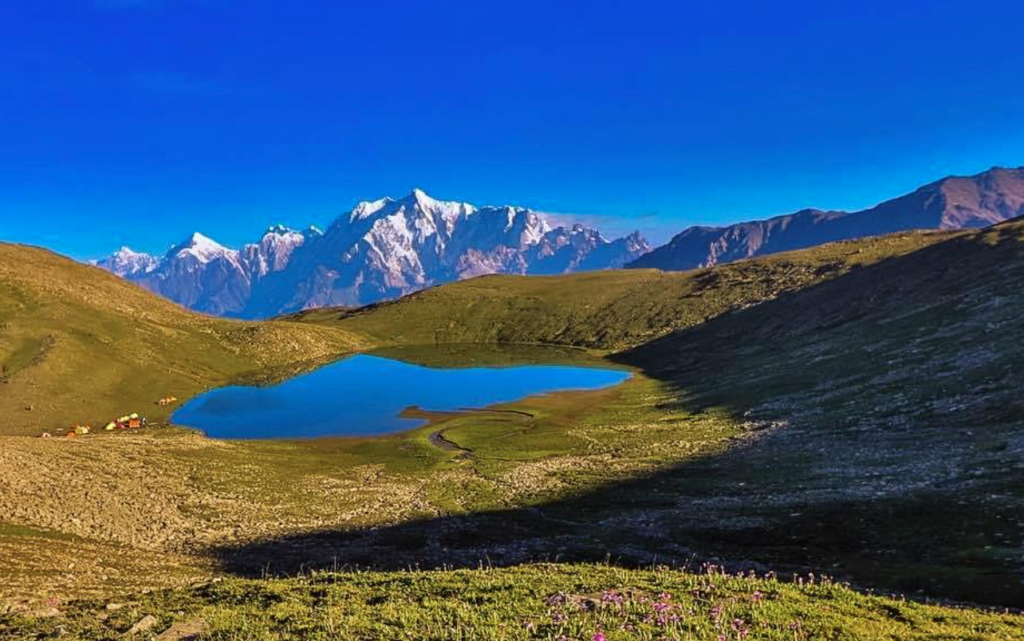
Patundas Meadows sits at 4,575 metres on the ridge between the Passu and Batura Glaciers in Upper Hunza. From this single vantage point, you look out across more than a dozen peaks above 7,000 metres — an ocean of snow and rock that stretches from Rakaposhi in the south to the Batura Wall in the north. There is no other accessible viewpoint in Pakistan that concentrates this number of giants into one unbroken panorama.
The Patundas Trek is one of the finest short mountain walks in the Karakoram. Unlike the longer, logistically complex expeditions of the Baltoro or Shimshal corridors, this route is achievable in 7 days of trekking from Borith Lake, crossing one glacier section on the Passu White Glacier before climbing through summer pastures and wildflower meadows to the ridge top. The Wakhi communities at Passugar and Luzdhar have tended these high pastures for centuries, and encounters with herders offering fresh yogurt and buttermilk are part of what makes this route feel genuinely local rather than touristic.
No description of Patundas Meadows is complete without accounting for what you actually see from the top. The ridge sits at the confluence of two of the Karakoram’s most heavily glaciated corridors. The Passu Glacier system drains from the east; the Batura Glacier, at 57 kilometres one of the longest valley glaciers outside the polar regions, fills the western skyline. Between them, the following peaks are visible with the naked eye on a clear day.
Patundas is accessible from late May through early October. The wildflower season peaks in late June and early July. For the clearest glacier views and most stable weather, July and August are ideal. September brings cooler temperatures and brilliant light but requires warm sleeping gear at altitude.
| Month | Conditions | Wildflowers | Crowds | Rating |
|---|---|---|---|---|
| May | Cool, some snow on ridge | Early | Very low | Good |
| June | Warm, clear | Peak bloom | Low | Best |
| July | Hot valley, clear summit | Good | Moderate | Best |
| August | Warm, stable, occasional cloud | Late season | High | Best |
| September | Crisp, excellent visibility | None | Low | Best |
| October | Cold nights, clear days | None | Very low | Good |
The core trek is 7 days from Borith Lake to Patundas and back. A 10-day programme adding Islamabad transit days and cultural visits to Hunza is our recommended option for first-time visitors to Pakistan.
IN PICTURES


DAY BY DAY
Airport transfer and welcome. Afternoon city orientation: Faisal Mosque, Pakistan Monument and the old bazaar lanes of Rawalpindi. Full route briefing with your lead guide over dinner.
Hotel · All meals
Drive north through Mansehra and Naran to the Babusar Pass, then descend to Chilas on the Indus. First Nanga Parbat views appear as you approach the valley in the late afternoon.
392km drive · Hotel · All meals
Drive north along the Karakoram Highway with a stop at Thalichi — the confluence of the Himalaya, Karakoram and Hindu Kush — and a tea break at the Rakaposhi viewpoint. Arrive at Borith Lake in the late afternoon. Camp beside the glacial pool with first views of the Passu Cones.
Drive via KKH · 2,700m · Camp · All meals
The first trekking day crosses a hot, dry ridge above the lake before descending into the ablation valley on the south side of the Passu Glacier. Passugar is a summer pasture with shepherd huts where the Wakhi herders make their seasonal camp. Views of Passu Peak, Shisper and Ultar Sar open progressively through the day.
3,210m · 3–4 hrs · Camp · All meals
The standout day on the lower route. You cross the Passu White Glacier with a short roped section at the start and end where crevasses are present — the middle of the glacier is straightforward. Beyond the glacier, the trail climbs to Luzdhar, the last camp before Patundas. The full Rakaposhi-Diran ridge comes into view for the first time from this height.
3,660m · 3–4 hrs · Glacier crossing · Camp · All meals
The long, steep climb of the trek — 915 metres of altitude gain through increasingly dramatic terrain. The ridge broadens as you approach Patundas, and the full panorama of 7,000-metre peaks appears over the lip. Dastagil Sar, Batura, Rakaposhi, Shisper, Passu Peak and Momhil Sar all visible simultaneously. Afternoon free to explore the meadow and photograph the peaks from every angle.
4,575m · 4–5 hrs · 915m ascent · Camp · All meals
A full free day at Patundas Meadows. Optional excursion towards the Shisper or Passu peak base camps for those wanting to push further. Astrophotography session after dark — at this altitude and distance from any settlement, the Karakoram night sky is extraordinary.
4,575m · Camp · All meals
Trek directly from Patundas down to Passu village via an alternative descent route. Transfer to hotel in Passu, with afternoon free for rest or a short walk along the Karakoram Highway to photograph the Passu Cones from the valley floor.
2,400m · Descent · Hotel Passu · All meals
Drive to Karimabad with stops at Attabad Lake — the turquoise reservoir formed in 2010 — and the Rakaposhi viewpoint. Afternoon visit to Baltit Fort (700 years, former seat of the Hunza Mir) and the 11th-century Altit Fort, the oldest monument in Gilgit-Baltistan. Evening water-channel walk along the irrigation pathway above the valley.
Drive south · Hotel Karimabad · All meals
The long return drive south via the Babusar Pass with a stop at Taxila Museum, one of the finest Gandharan Buddhist heritage sites in South Asia. Arrive Islamabad for final evening, farewell dinner with the team.
Long drive · Hotel Islamabad · All meals
Transfer to Islamabad International Airport. Morning free depending on your onward flight. This day can be used for last shopping in the city's craft markets and cultural areas.
Departure day
THE DESTINATION
Destination overview. The final route is confirmed with your trip itinerary.
Open map in a new tab ↗Travel dates
Tell us your dates and group size and we will confirm the next departure or arrange a private one.
What's covered
Prepare for the journey
Good to know
The Patundas Trek is rated easy to moderate. The majority of the route follows established pasture paths with a steady gradient. The one technically demanding section is the Passu White Glacier crossing, which involves a short roped section at each end where crevasses are present. No prior glacier experience is needed — your guide leads the rope team through. The steepest day is the climb from Luzdhar to Patundas, gaining 915 metres in altitude.
The highest point is Patundas Meadows at 4,575 metres (15,010 feet), on the ridge between the Passu and Batura Glaciers. This is a significant altitude, but the gradual ascent over three days gives the body adequate time to acclimatise without a dedicated acclimatisation day being required for most trekkers.
Yes. The Patundas Trek is one of the most beginner-friendly high-altitude routes in Pakistan. You do not need prior trekking experience or altitude exposure. A reasonable base fitness level — comfortable walking 4–6 hours on a day with a loaded daypack — is sufficient preparation. We recommend 6–8 weeks of regular hill walking beforehand.
On a clear day from Patundas you can see Dastagil Sar (7,885m), Batura I (7,795m), Rakaposhi (7,788m), Shisper (7,611m), Karoon Koh (7,458m), Ultar Sar (7,388m), Passu Peak (7,284m), Momhil Sar (7,343m), Bojohagur Duanasir II (7,329m), and numerous additional 6,000-metre peaks in every direction. It is one of the highest-density panoramas in accessible trekking anywhere on earth.
No permit is currently required for the Patundas route. The route does not enter any restricted zone or national park that levies a trekking fee. Broad Peak Adventures handles all camping fees and permissions as part of the package price.
We drive all guests on the Karakoram Highway via the Babusar Pass (4,173m), a two-day journey from Islamabad that is itself one of the great road trips in Asia. Domestic flights from Islamabad to Gilgit exist but are weather-dependent and frequently cancelled. The overland route is the reliable option and we include it in all our Hunza programmes.
Share your preferred dates, group size, travel experience and any accessibility or dietary requirements. Ask our team for a written itinerary and a clear breakdown of included services, optional activities and additional costs before confirming.
Check the start and finish locations shown in the trip specifications. Confirm airport transfers, meeting times and any domestic flights with our team before booking independent travel. Allow flexibility for weather and transport changes.
Ask for the accommodation plan for each night, room or tent arrangements and meal inclusions for your chosen departure. Tell us about food allergies and dietary needs in advance so we can confirm what is possible along the route.
Review the itinerary, difficulty and maximum altitude before choosing this journey. Request the trip-specific packing list and confirm any rental equipment, sizes and availability before arrival. Discuss any health concerns with a qualified clinician before travel.
Check current entry requirements for your nationality and confirm whether your route needs additional permits. Review insurance coverage for your planned activities, maximum altitude, medical care and evacuation. Ask our team which documents are needed for this itinerary.
Weather, road conditions and local circumstances can affect the programme. Ask about alternative routes, spare days and how additional costs are handled. Contact us to discuss a private departure or changes to the published itinerary.
From our travellers
You spend two days working your way up through the pastures. Then the ridge opens. Every direction is a different 7,000-metre peak. Rakaposhi to the south, Batura filling the north. I have been to many mountain viewpoints. Patundas is the one I would return to.
Keep exploring
A 16-day guided trek through Upper Hunza to Rush Lake and Patundas Meadows with an optional Rush Peak summit at 5,098m.
Snow Lake and Hispar La form one of Pakistan’s most remote glacier trekking routes. This is a demanding journey requiring strong fitness,…
Explore the landscapes around Rakaposhi and the valleys of Nagar, with views of one of the most prominent peaks in the Karakoram.