Treks
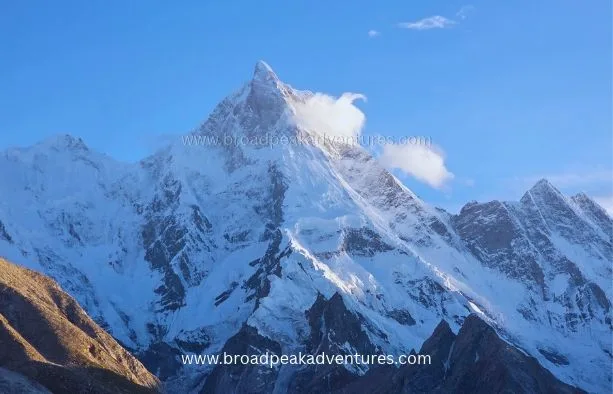
Masherbrum Base Camp Trek
A short trek from Hushe village to the foot of Masherbrum, the 7,821 metre peak once known as K1, with a base…
12 daysModerate
Explore journey →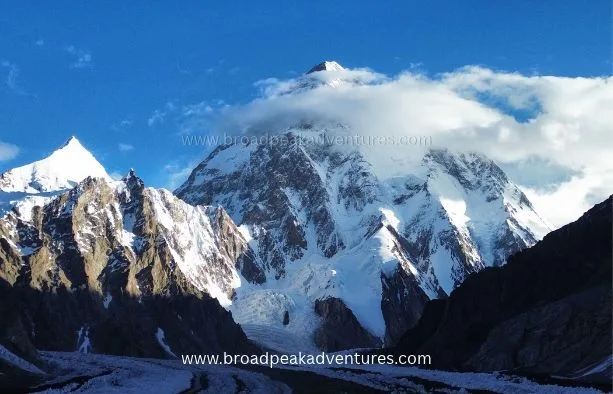
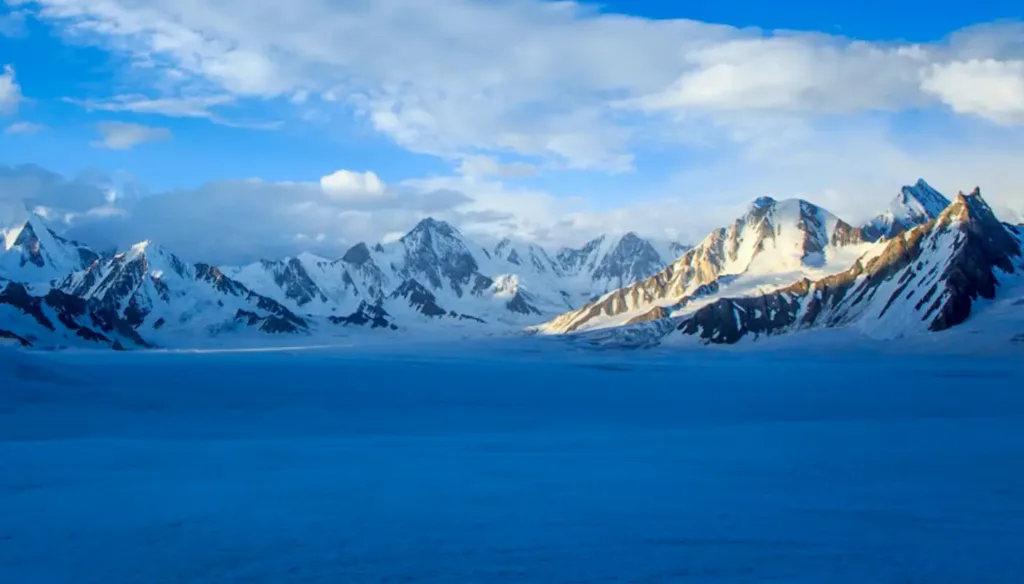
The Baltoro Glacier and Concordia under snow, with the winter K2 expeditions
THE JOURNEY
For decades K2 was the last 8,000 metre peak without a winter ascent. That changed on 16 January 2021, when a team of Nepali climbers stood on the summit, and since then winter expeditions have returned to K2 Base Camp most seasons. This trek takes you up the Baltoro Glacier in January and February to see the Karakoram the way very few people ever do: under snow, silent, and empty of other trekking groups.
It follows the line of our summer K2 Base Camp trek, with an extra rest day low on the glacier and a spare day at Concordia for weather. Concordia is the main goal. We continue to Broad Peak and K2 Base Camps only when snow and avalanche conditions are safe.
Nights on the upper Baltoro drop to around minus 20 to minus 30 °C. A winter expedition in 2020 reported setting up K2 Base Camp at minus 27 °C. Days are short, the Braldu freezes, and fresh snow can turn a five hour stage into a much longer one. Porters carry lighter loads in winter, so the crew is larger, and the group travels with winter tents and a heated mess tent.
The Gondogoro La is not crossed in winter, so the trek returns down the Baltoro to Askole. Flights to Skardu run all year but are cancelled more often, which is why the itinerary keeps spare time.
Fit trekkers with previous high altitude or cold weather camping experience. Departures are private only, planned around your dates and group. If this would be your first big trek, a summer departure is the better choice.
IN PICTURES
DAY BY DAY
Our team meets you at the airport. In the evening your guide goes through the winter plan, the cold weather kit list and the safety procedures.
Winter flights are cancelled more often than summer ones. If ours does not go, we drive the Karakoram Highway via Chilas.
A full kit check, with rentals for anything missing, plus permits and final packing for a cold trek.
Through the Shigar valley and up the Braldu gorge. Snow on the road can make this a long day.
Along the frozen Braldu River, six to seven hours.
About six hours to Paiju, quiet and snow covered in winter.
Acclimatise while the porters reorganise winter loads, which are lighter than in summer.
Onto the Baltoro Glacier. Fresh snow can slow progress, so we set the pace by the conditions.
Four to five hours to Urdukas, facing the Trango Towers.
About seven hours on the upper glacier, the coldest camps of the trek.
Five to six hours. K2 stands above an empty, snow covered Concordia.
Only if snow and avalanche conditions are safe. If not, we spend a second day at Concordia.
Seven to nine hours. Visit K2 Base Camp and any winter expedition teams happy to host visitors, then return to Concordia.
Held for weather on the way up or down.
The walk out begins.
About seven hours.
About five hours, off the glacier.
Six to seven hours along the Braldu.
A farewell to the porters, then the jeep back to Skardu.
Weather permitting, with the road as a backup.
Transfer to Islamabad International Airport.
THE DESTINATION
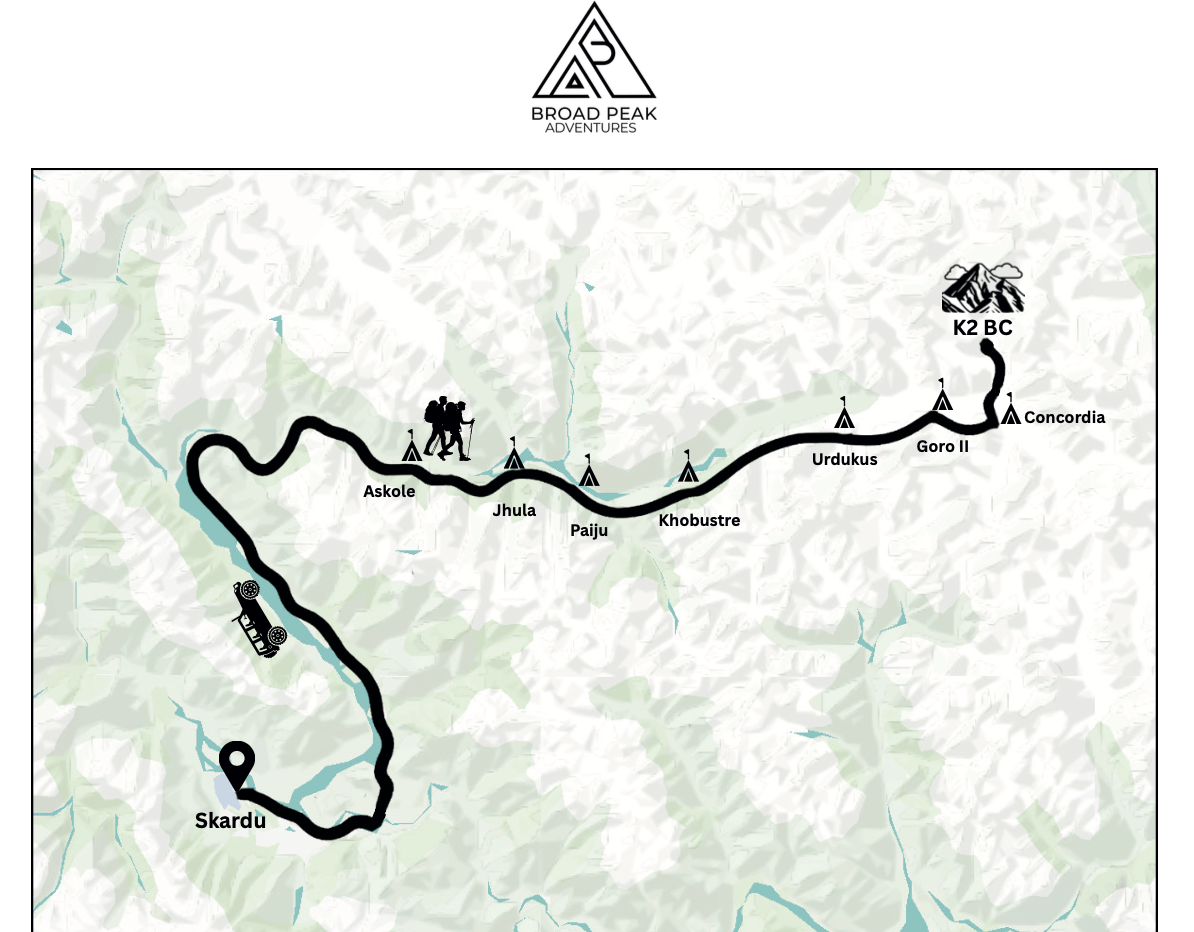 Open map in a new tab ↗
Travel dates
What's covered
Prepare for the journey
Good to know
Expect night temperatures of around minus 20 to minus 30 °C on the upper Baltoro. A winter expedition in 2020 reported setting up K2 Base Camp at minus 27 °C.
Concordia is the main goal. We go on to Broad Peak and K2 Base Camps only when snow and avalanche conditions are safe.
No. The pass is not crossed in winter, so the trek returns down the Baltoro to Askole.
Yes, but cancellations are more common. We keep spare time and can drive the Karakoram Highway if needed.
Fit trekkers with previous high altitude or winter camping experience. For a first big trek, choose a summer departure.
Share your preferred dates, group size, travel experience and any accessibility or dietary requirements. Ask our team for a written itinerary and a clear breakdown of included services, optional activities and additional costs before confirming.
Check the start and finish locations shown in the trip specifications. Confirm airport transfers, meeting times and any domestic flights with our team before booking independent travel. Allow flexibility for weather and transport changes.
Ask for the accommodation plan for each night, room or tent arrangements and meal inclusions for your chosen departure. Tell us about food allergies and dietary needs in advance so we can confirm what is possible along the route.
Review the itinerary, difficulty and maximum altitude before choosing this journey. Request the trip-specific packing list and confirm any rental equipment, sizes and availability before arrival. Discuss any health concerns with a qualified clinician before travel.
Check current entry requirements for your nationality and confirm whether your route needs additional permits. Review insurance coverage for your planned activities, maximum altitude, medical care and evacuation. Ask our team which documents are needed for this itinerary.
Weather, road conditions and local circumstances can affect the programme. Ask about alternative routes, spare days and how additional costs are handled. Contact us to discuss a private departure or changes to the published itinerary.
Keep exploring
A short trek from Hushe village to the foot of Masherbrum, the 7,821 metre peak once known as K1, with a base…
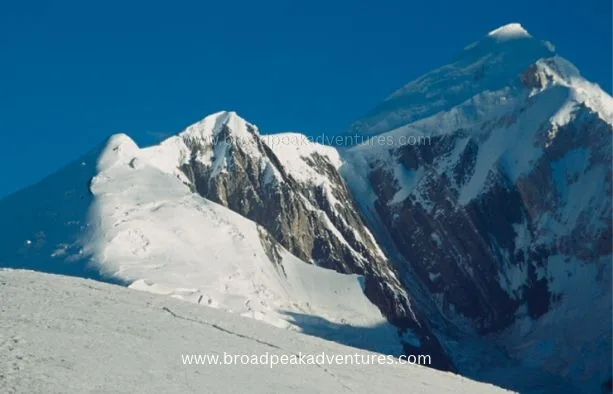
A quiet trek along the Chogolungma Glacier from the Balti village of Arandu to the base camp of Spantik, the 7,027 metre…
Walk the 67 kilometre Biafo Glacier from Askole to Snow Lake, a vast basin of ice beneath the Ogre and the Latok…