Table of contents
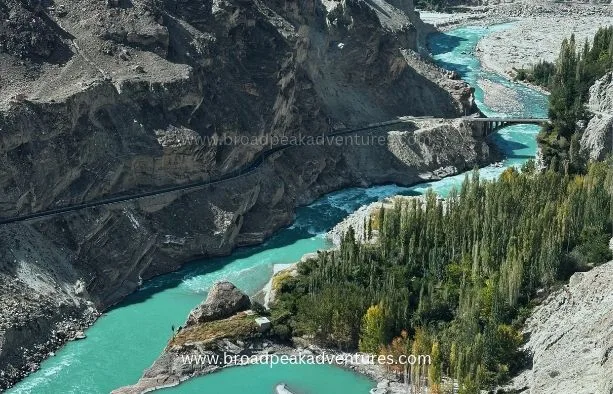
Hunza is the place that changes people’s minds about Pakistan. Travellers arrive expecting rough roads and hard travel, and instead they find terraced orchards, ancient forts, turquoise water and some of the kindest hosts in the country, all set beneath peaks above 7,000 metres.
Our team guides visitors through Hunza from the first apricot blossom in spring to the last golden leaves of autumn. This guide brings together what we tell our own guests before they travel to Hunza Valley, including how to get there, when to go, what to see and how long to stay.
Where Is Hunza Valley?
Hunza Valley lies in the Gilgit-Baltistan region of northern Pakistan, along the Hunza River and the Karakoram Highway. It begins about 100 kilometres north of Gilgit and stretches all the way to the Chinese border at Khunjerab Pass.
The valley is usually described in three parts.
- Lower Hunza: The first villages you reach from Gilgit, with the classic roadside view of Rakaposhi.
- Central Hunza: The heart of the valley around Karimabad, Altit and Aliabad, where most visitors stay.
- Upper Hunza or Gojal: The wilder northern section that includes Attabad Lake, Gulmit, Passu, Sost and Khunjerab.
Across the river from Central Hunza is Nagar. The two were rival princely states for centuries and were administered together as the Hunza Nagar district until 2015, when they became separate districts. Most Hunza trips include a visit to Nagar, usually to Hopper Glacier.
How to Travel to Hunza Valley
Fly to Gilgit
The fastest route is a flight from Islamabad to Gilgit, which takes about an hour. From Gilgit airport, Karimabad is a drive of two to two and a half hours on a good road. Flights depend on clear weather over the mountains and are often cancelled, so keep your plans flexible.
Drive the Karakoram Highway
The Karakoram Highway runs from near Islamabad to the Chinese border and is one of the great road journeys of the world. Driving to Hunza takes two days, normally with an overnight stop in Chilas or Besham. The road follows the Indus through deep gorges and passes the point where the Karakoram, Himalaya and Hindu Kush ranges meet.
Drive via Babusar Pass
From roughly June to early October, you can take the shorter and greener route through Naran and over Babusar Pass. It rejoins the Karakoram Highway near Chilas and saves several hours.
Combine It With Skardu
Many travellers visit both Hunza and Skardu in one trip. The drive between the two takes around six to seven hours, so it is easy to fly into one and out of the other.
Best Time to Travel to Hunza
Hunza is a year round destination, but the experience changes a great deal with the seasons.
| Season | Months | What to expect |
|---|---|---|
| Spring | Late March to April | Apricot, cherry and almond blossom across the valley, with cool days |
| Summer | May to September | Warm weather, open passes, fresh fruit and the busiest period |
| Autumn | October to early November | Gold and red foliage, clear skies and fewer visitors |
| Winter | December to February | Snow, frozen lakes, very cold nights and many hotels closed |
If we had to choose, we would send first time visitors in April for the blossom or in late October for the autumn colour. Both are quieter than midsummer and far more photogenic.
Top Places to Visit in Hunza Valley
Karimabad
Karimabad is the main town of Central Hunza and the best base for a first visit. Its sloping bazaar is lined with cafes, craft shops and guesthouses, and the views of Rakaposhi, Ultar Sar and Ladyfinger Peak are extraordinary.
Baltit Fort
Perched above Karimabad, Baltit Fort is around 700 years old and was the seat of the rulers of Hunza. It has been carefully restored and is now a museum. A guided tour takes about 45 minutes.
Altit Fort
Altit Fort is older still, with parts dating back around 900 years. It stands on a sheer cliff above the Hunza River, and the surrounding old village and royal garden are well worth exploring.
Eagle’s Nest at Duikar
This viewpoint above Altit is the place to be at sunrise or sunset. On a clear day you can see several peaks above 7,000 metres in a single sweep.
Attabad Lake
Attabad Lake was created in January 2010 when a huge landslide blocked the Hunza River. What began as a disaster is now one of the most striking sights in Pakistan, with deep blue water held between bare rock walls. Boating and jet skiing are available in summer.
Passu Cones
The jagged spires above Passu village, also called the Passu Cathedral, are the image most people associate with Upper Hunza. The best views are from the highway just south of the village.
Hussaini Suspension Bridge
This long footbridge of cables and wooden planks crosses the Hunza River near Hussaini village. It looks far more frightening than it is, and it makes for a memorable half hour.
Khunjerab Pass
At 4,693 metres, Khunjerab is the highest paved international border crossing in the world. The drive passes through Khunjerab National Park, where you may spot ibex, marmots and yaks. The pass is normally open to visitors from about May to November.
Hopper Glacier in Nagar
A side trip across the river takes you to Hopper, where you can stand on the edge of a glacier after a short walk from the road. It is an easy way to see ice up close without a trek.
Rakaposhi Viewpoint
On the highway at Ghulmet, a roadside stop looks straight up at the north face of Rakaposhi, which rises to 7,788 metres. It is a natural tea stop on the way in or out of the valley.
How Many Days Do You Need for a Hunza Trip?
- Four to five days: Enough for Karimabad, the two forts, Eagle’s Nest, Attabad Lake and Passu if you fly both ways.
- Seven to eight days: The most comfortable option by road, with time for Khunjerab Pass and Nagar.
- Ten to twelve days: Allows you to combine Hunza with Skardu or Fairy Meadows.
Easy Walks and Day Hikes
You do not need to be a trekker to enjoy Hunza on foot. The water channel walk above Karimabad follows an old irrigation canal with wide views of the valley. From Passu, a short trail leads to the edge of the Passu Glacier and on to Borith Lake. Fitter visitors can hike to Ultar Meadows above Baltit Fort, a steep half day that ends beneath the icefall of Ultar Sar.
Food and Culture in Hunza
The people of Central Hunza speak Burushaski, a language unrelated to any other. In Gojal the main language is Wakhi, and in Lower Hunza it is Shina. Most people are Ismaili Muslims, and the valley is known for its high literacy and for the visible role women play in business and public life.
Do not leave without trying the local food. Chapshoro is a meat filled pastry, and you should also look for apricot soup, walnut cake, buckwheat bread and anything made with apricot oil. Dried apricots, mulberries and walnuts make excellent gifts to take home.
Where to Stay
Karimabad has the widest choice, from family guesthouses to high end hotels with mountain views. For a quieter stay, Altit, Gulmit and Passu have smaller lodges and homestays. In April, July, August and October the best rooms sell out weeks ahead, so book early.
Practical Tips for Hunza Travel
- Money: Carry enough cash. ATMs exist in Aliabad and Karimabad but are unreliable with foreign cards.
- Connectivity: SCOM offers the best mobile data in the valley. Hotel wifi is often slow.
- Clothing: Bring layers. Even in summer, evenings are cool and Khunjerab is cold all year.
- Altitude: Karimabad sits at about 2,500 metres and causes few problems. Take it slowly at Khunjerab.
- Respect: Hunza is relaxed by Pakistani standards, but modest clothing and asking before photographing people are always appreciated.
- Visa: A standard tourist e-visa covers Hunza. No special permit is needed for the main valley.
Frequently Asked Questions
Is Hunza Valley safe for tourists?
Yes. Hunza is widely regarded as one of the safest regions in Pakistan, with very low crime and a long tradition of welcoming foreign visitors.
What is the best month to visit Hunza?
April for the blossom and October for autumn colours are the most beautiful months. June to September offers the warmest weather and full road access.
How do I get to Hunza from Islamabad?
You can fly to Gilgit in about an hour and drive two to two and a half hours to Karimabad, or drive the Karakoram Highway over two days.
How many days are enough for Hunza?
Five days is the minimum for a relaxed visit. Seven to eight days lets you include Khunjerab Pass and Nagar.
Can I visit Hunza and Skardu in one trip?
Yes. The two are six to seven hours apart by road, and a combined trip of ten to twelve days is very popular.
Travel to Hunza With People Who Know It
A good Hunza trip depends on timing, a reliable driver and knowing which viewpoints are worth the detour. Our Hunza Valley tours are run by local guides and can be tailored to your dates, pace and interests. Tell us when you would like to travel and we will send you a suggested itinerary.
Last updated . Prices, dates and conditions can change, so confirm details with our team before booking.