Table of contents
Skardu is our home. Our office is here, our guides grew up here, and nearly every trek and expedition we run begins with a night in this town. So when people ask us where Skardu is and whether it deserves more than a quick stop on the way to K2, we have a lot to say.
This guide explains where Skardu Valley sits on the map, how to reach it, when to come and what to see once you arrive.
Where Is Skardu?
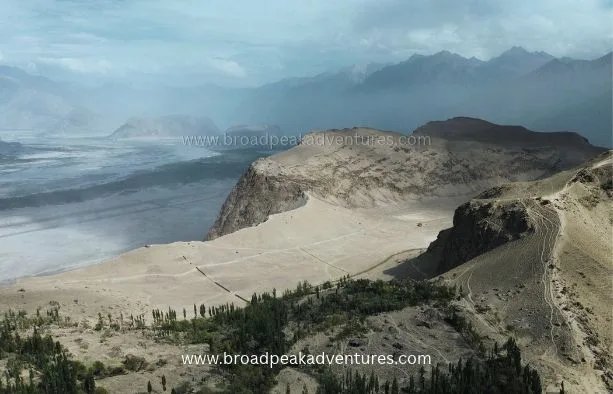
Skardu is the main town of Baltistan, in the Gilgit-Baltistan region of northern Pakistan. It sits at roughly 2,230 metres above sea level in a wide, sandy valley where the Shigar River joins the Indus. The Karakoram range rises to the north and the western Himalaya to the south, which means the town is surrounded by high mountains on every side.
In practical terms, Skardu is about an hour by air from Islamabad and around 200 kilometres by road from Gilgit. It is the last proper town before the great glaciers of the Karakoram and the starting point for journeys to K2, Broad Peak, the Gasherbrums and Deosai.
Skardu at a Glance
| Detail | Information |
|---|---|
| Region | Baltistan, Gilgit-Baltistan, Pakistan |
| Elevation | About 2,230 m (7,300 ft) |
| Rivers | Indus and Shigar |
| Main language | Balti, with Urdu and some English widely understood |
| Nearest airport | Skardu International Airport |
| Known for | Gateway to K2 and the Karakoram, cold deserts, lakes and forts |
Skardu, Baltistan and Gilgit-Baltistan Explained
The names can be confusing, so here is the simple version. Gilgit-Baltistan is the wider administrative region in the far north of Pakistan. It has two historic halves. Gilgit is the western half and includes Hunza and Nagar. Baltistan is the eastern half, and Skardu is its capital and largest town.
Baltistan is sometimes called Little Tibet. The Balti people speak a language closely related to Tibetan, and old Buddhist rock carvings still stand outside the town. Today the population is Muslim, and the culture blends Tibetan roots with Persian and Kashmiri influences. You will see it in the wooden mosques, the food and the architecture of the old forts.
How to Get to Skardu
By Air
Flying is the quickest way in. Flights run from Islamabad to Skardu and take about an hour, with seasonal services from other Pakistani cities as well. On a clear day the route passes close to Nanga Parbat, and it is one of the most scenic commercial flights anywhere.
The catch is weather. Flights operate only when visibility in the mountains is good, and cancellations are common. We always build a spare day into itineraries for this reason, and you should too.
By Road
There are two main road routes from Islamabad.
- The Karakoram Highway: This route follows the Indus through Besham and Chilas, then turns east at Jaglot onto the Skardu road. Allow two days with an overnight stop in Chilas or nearby.
- Via Babusar Pass: In summer, usually from June to September or October, you can drive through the Kaghan Valley and over Babusar Pass at about 4,170 metres. It is shorter and far greener.
The road from Jaglot to Skardu has been rebuilt in recent years and is now a smooth drive of around four hours along the Indus gorge. It used to take twice that.
Best Time to Visit Skardu
Skardu has four distinct seasons, and each one suits a different kind of trip.
- Spring (late March to May): Apricot and cherry trees blossom across the valley. Days are mild and the high passes are still closed.
- Summer (June to August): This is the main season for trekking and expeditions. Days are warm, Deosai opens, and the town is at its busiest.
- Autumn (September to early November): The poplars turn gold, the skies are clear and the crowds thin out. Many locals consider this the most beautiful time of year.
- Winter (December to February): It is cold, quiet and snowy. Flights are less reliable, but the frozen lakes and empty valleys reward those who make the effort.
Top Places to Visit in Skardu Valley
Shangrila Resort and Lower Kachura Lake
The red roofed resort beside Lower Kachura Lake is the most photographed spot in Skardu. It is about 30 minutes from town and makes an easy first stop.
Upper Kachura Lake
A short drive beyond Shangrila, Upper Kachura is larger, quieter and ringed by orchards and forest. You can take a rowing boat out or walk the shore.
Kharpocho Fort
This sixteenth century fort sits on a rock above the old bazaar. The climb takes about 30 minutes and the view over the Indus and the town at sunset is worth every step.
Katpana and Sarfaranga Cold Deserts
Sand dunes at over 2,200 metres, backed by snowy peaks, are not something you see every day. Katpana is close to town, while Sarfaranga lies on the way to Shigar and hosts a jeep rally in summer.
Deosai National Park
Deosai is a high plateau with an average elevation above 4,000 metres, and it is often called the Land of Giants. In July and August it is covered in wildflowers. It is also home to the Himalayan brown bear. Sheosar Lake on the far side is a highlight. Deosai is normally open from around June to October.
Satpara Lake
This turquoise reservoir supplies water to the town and lies on the road to Deosai. It is a good place to stop for tea.
Shigar Fort and Valley
Shigar is 45 minutes from Skardu and is the gateway to the Baltoro Glacier. The 400 year old fort has been restored as a heritage hotel, and the village around it is full of old wooden houses and mosques.
Khaplu Palace
About two hours east of Skardu, Khaplu is the prettiest town in Baltistan. The restored palace and the wooden Chaqchan Mosque are both worth the drive along the Shyok River.
Manthal Buddha Rock
A large granite boulder carved with Buddha figures stands just outside town. It dates to around the eighth century and is a reminder of the valley’s Buddhist past.
Skardu as the Gateway to K2
For trekkers and climbers, Skardu is where the real journey starts. Permits are finalised here, equipment is checked, and porters and kitchen crews are organised. From town, a jeep road runs through Shigar to the village of Askole, the last settlement before the Baltoro Glacier.
From Askole it takes about a week on foot to reach Concordia and the base camps of K2 and Broad Peak. Treks over Gondogoro La finish in Hushe, on the Khaplu side, and return to Skardu from there. Snow Lake and the Biafo Glacier are also reached through Askole.
We recommend spending at least two nights in Skardu before a trek. It helps with acclimatisation, gives you time for last minute shopping, and lets you see the lakes and forts before you head into the mountains.
Where to Stay and What to Eat
Skardu has options for every budget. There are simple guesthouses in the bazaar, comfortable mid range hotels along the river, and heritage properties such as Shigar Fort and Khaplu Palace. In peak season, from June to August, rooms fill quickly and booking ahead is wise.
For food, look for Balti dishes that are hard to find elsewhere in Pakistan. Mamtu dumplings, balay noodle soup and prapu noodles with walnut paste are local favourites. Fresh apricots, cherries and mulberries are everywhere in summer.
Practical Tips for Visiting Skardu
- Bring cash. There are ATMs in town, but they do not always work with foreign cards.
- Buy a local SIM. SCOM has the best coverage in Gilgit-Baltistan. Other networks can be patchy.
- Dress modestly. Baltistan is conservative. Long trousers and covered shoulders are appreciated for everyone.
- Allow for delays. Weather affects both flights and roads, so keep a buffer day at each end of your trip.
- Take altitude seriously. Skardu itself is comfortable, but Deosai and the trekking routes climb quickly.
- Carry your passport. Foreign visitors are registered at checkpoints along the road.
Frequently Asked Questions
Where is Skardu in Pakistan?
Skardu is in Baltistan, in the Gilgit-Baltistan region of northern Pakistan. It lies in a broad valley at the meeting point of the Indus and Shigar rivers, at about 2,230 metres.
Is Skardu in Gilgit or Baltistan?
Skardu is in Baltistan. Gilgit and Baltistan are two parts of the same region, which is called Gilgit-Baltistan. Skardu is the main town of the Baltistan side.
How many days do you need in Skardu?
Three to four days is enough to see the lakes, forts, cold desert and Shigar. Add two more days if you want to visit Deosai and Khaplu.
What is Skardu famous for?
Skardu is famous as the gateway to K2 and four other peaks above 8,000 metres. It is also known for its lakes, cold deserts, Deosai National Park and Balti culture.
Is Skardu safe for tourists?
Skardu is one of the safest and most welcoming places in Pakistan. Crime against visitors is rare, and the local community depends on and values tourism.
Plan Your Skardu Trip With a Local Team
We live and work in Skardu, so we can arrange everything from a three day sightseeing tour to a full K2 Base Camp trek. If you would like help with flights, hotels, jeeps or a custom itinerary, send us a message and we will put a plan together for you.
Last updated . Prices, dates and conditions can change, so confirm details with our team before booking.