Table of contents
Ask anyone who has travelled through Pakistan what they remember most, and the mountains usually come second. The first answer is almost always the food. A plate of biryani at a roadside hotel in Punjab, hot chapli kabab in Peshawar, or apricot soup in a Hunza kitchen after a long drive tends to stay with people for years.
We are based in Skardu and spend most of the year feeding trekkers, climbers and travellers on their way through the country. This guide covers the Pakistani dishes we think every visitor should try, what they are called, where they come from, and how food fits into the culture here.
What Is Pakistani Cuisine?
Pakistani cuisine is a mix of several older food traditions that met along the Indus. The Mughal courts left behind rich meat curries, slow cooked stews and layered rice. Central Asia and Afghanistan brought kababs, pulao and bread baked in clay ovens. Punjab and Sindh contributed lentils, vegetables, butter and a love of spice, while the northern mountains developed their own simple cooking based on wheat, barley, apricots and yak or goat meat.
The result is food that is heavy on meat, bread and rice, generous with ghee, and layered with spices such as cumin, coriander, cardamom, cloves and black pepper. It is flavourful more often than it is painfully hot, and the heat drops noticeably as you travel north.
What Is the National Food Dish of Pakistan?
Nihari is widely regarded as the national dish of Pakistan. It is a slow cooked stew of beef or mutton shank, simmered overnight with bone marrow and a spice blend until the meat falls apart. It is traditionally eaten for breakfast with fresh naan, a squeeze of lemon, sliced ginger and green chillies.
You will also hear people argue for biryani, and it is easy to see why. No wedding, festival or family gathering is complete without it. If nihari is the official answer, biryani is the dish the country actually runs on.
Famous Pakistani Dishes and Their Names
Here are the dishes you will see most often on menus, with a short note on each so you know what you are ordering.
Rice Dishes
- Biryani: Spiced rice layered with chicken, mutton or beef. Karachi and Sindhi versions are the spiciest and often include potatoes.
- Pulao: A gentler rice dish cooked in meat stock. Kabuli pulao, topped with carrots and raisins, is a favourite in Peshawar and across the north.
- Daal chawal: Lentils over plain rice. This is the everyday comfort meal in most Pakistani homes.
Meat Curries and Stews
- Nihari: The national dish described above.
- Karahi: Chicken or mutton cooked quickly in a wok shaped pan with tomatoes, ginger and green chillies. Order it by weight and share it.
- Haleem: Wheat, lentils and meat cooked for hours into a thick porridge, then topped with fried onions and lemon.
- Paya: A rich soup made from goat or cow trotters, eaten at breakfast.
- Korma: A mild, creamy curry with roots in Mughal kitchens.
- Saag with makki ki roti: Mustard greens served with cornbread and butter. This is a winter classic from Punjab.
Kababs and Grilled Meat
- Seekh kabab: Minced meat pressed onto skewers and grilled over charcoal.
- Chapli kabab: A flat, juicy patty from Peshawar made with minced beef, tomatoes, coriander seeds and pomegranate seeds.
- Chicken tikka: Marinated chicken pieces grilled on the bone.
- Sajji: Whole lamb or chicken stuffed with rice and roasted beside an open fire. It comes from Balochistan.
Breads
- Naan and roti: The two breads you will eat every day. Naan is baked in a tandoor and roti is cooked on a flat griddle.
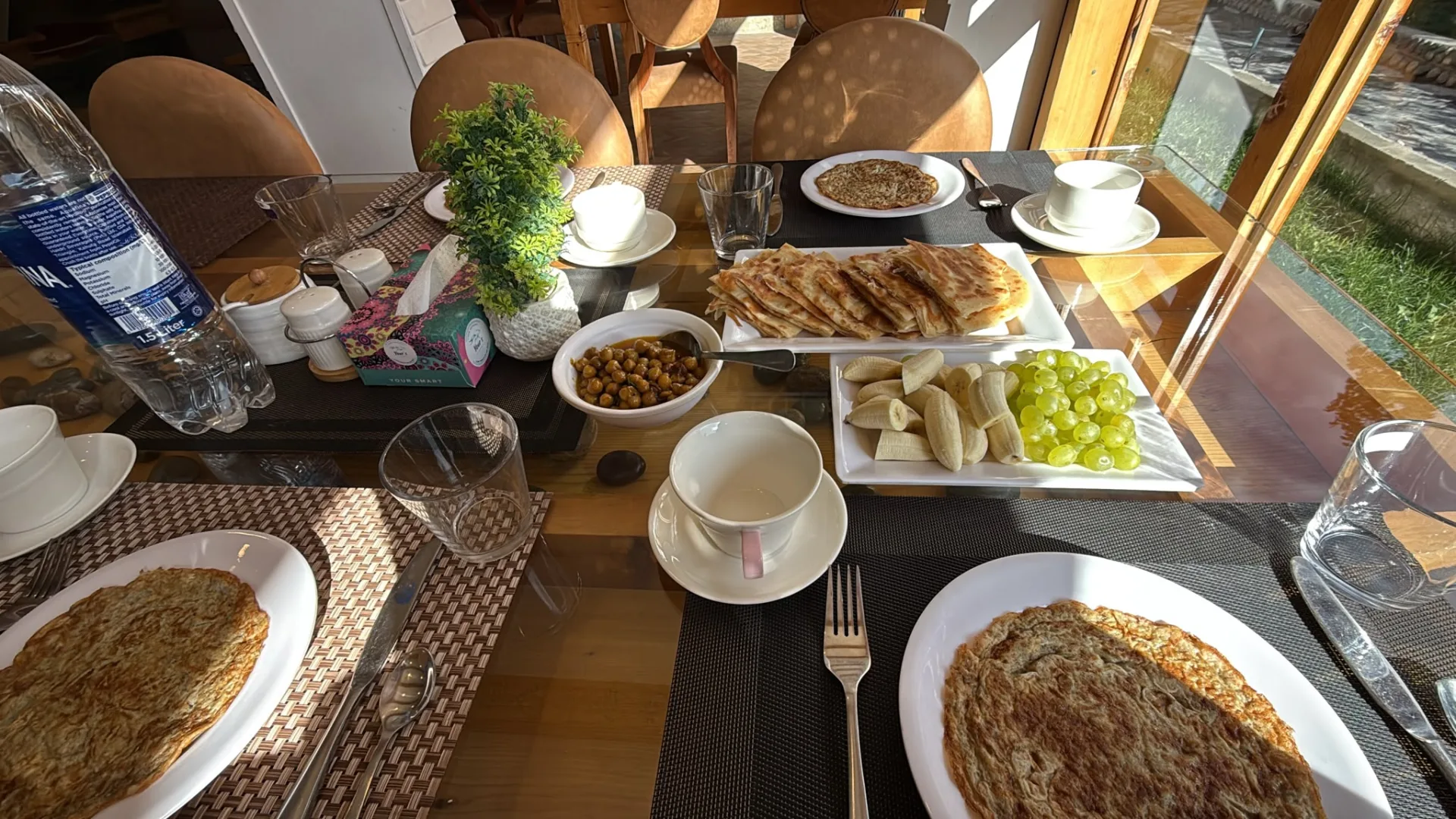
- Paratha: Flaky fried bread, usually served at breakfast with eggs or chickpeas.
- Halwa puri: Deep fried bread served with sweet semolina halwa and chickpea curry. This is the weekend breakfast of choice in Lahore and Karachi.
Food From the Northern Mountains
This is the part of the menu most guidebooks skip, and it is the food we eat at home.
- Chapshoro: A baked pastry filled with minced meat, onions and herbs. People call it the Hunza pizza.
- Mamtu: Steamed dumplings filled with meat and onion, served with vinegar and chilli sauce. You will find them all over Skardu and Gilgit.
- Balay: A thick Balti noodle soup made with goat meat. It is perfect after a cold day outside.
- Prapu: Hand rolled wheat noodles tossed with ground walnuts or apricot kernels. This is a traditional Balti dish.
- Harissa: Wheat and meat cooked down into a smooth, hearty paste that is popular in Hunza and Kashmir.
- Apricot soup: A light soup made from dried Hunza apricots, served warm.
Sweets and Drinks
- Kheer: Rice pudding with cardamom and nuts.
- Gulab jamun: Soft milk dumplings soaked in syrup.
- Jalebi: Crisp spirals of fried batter dipped in syrup, best eaten hot.
- Chai: Strong milk tea, offered everywhere and at every hour.
- Lassi: A yogurt drink served sweet or salted, and a lifesaver in the summer heat of Punjab.
- Butter tea: Salty tea churned with butter, common in Baltistan and an acquired taste worth acquiring.
Food and Culture in Pakistan
Food in Pakistani culture is about hospitality before anything else. A guest is considered a blessing, and you will be offered tea within minutes of entering almost any home, shop or office. Refusing a second helping takes real effort.
A few customs are useful to know before you arrive:
- Meals are shared. Dishes go in the middle of the table and everyone eats from them with bread.
- The right hand is used for eating. Cutlery is available in restaurants, but bread is the usual tool.
- All food is halal. Pork is not served and alcohol is not part of local dining.
- Breakfast is a serious meal. Nihari, paya and halwa puri are all morning dishes.
- Ramadan changes the rhythm. During the fasting month, most restaurants open at sunset, and the evening meal called iftar is a wonderful thing to be invited to.
- Weddings and Eid mean feasting. Biryani, korma and sweets are cooked in huge pots called degs and served to hundreds of guests.
Is Pakistani Food the Same as Indian Food?
Travellers often ask whether they will find Indian food in Pakistan. The honest answer is that the two cuisines share a long history, especially across Punjab, so you will recognise dishes such as daal, tikka, paratha and biryani.
The differences show up quickly, though. Pakistani cooking uses far more meat, particularly beef and mutton, and vegetarian meals play a smaller role than they do in India. The Afghan and Central Asian influence is also much stronger, which is why kababs, pulao and tandoor bread dominate in the northwest. If you enjoy North Indian food, you will feel at home here and still find plenty that is new.
Where to Try the Best Food in Pakistan
Every region has a speciality, and planning your meals around your route is half the fun.
| City or region | What to eat |
|---|---|
| Lahore | Nihari, paya, halwa puri and anything on Food Street |
| Karachi | Biryani, haleem and bun kabab |
| Peshawar | Chapli kabab, Kabuli pulao and green tea |
| Quetta | Sajji and roasted lamb |
| Islamabad and Rawalpindi | Karahi and barbecue in the Margalla foothills |
| Hunza | Chapshoro, harissa, apricot soup and walnut cake |
| Skardu | Mamtu, balay, prapu and butter tea |
What Do You Eat on a Trek in Pakistan?
Many of our guests are surprised by how well they eat on the trail. On a camping trek such as K2 Base Camp, a cook and kitchen crew travel with the group. Breakfast is usually porridge, eggs, paratha and tea. Lunch is a hot meal on the way, and dinner is soup followed by rice, daal, vegetables and chicken or goat.
Fresh meat is carried on the hoof for the first days, and our cooks are happy to prepare vegetarian meals if you tell us in advance. After two weeks on a glacier, the first plate of mamtu back in Skardu tastes better than anything you have eaten before.
Tips for Eating Safely as a Visitor
- Drink bottled or filtered water and avoid ice from unknown sources.
- Choose busy restaurants where food is cooked fresh in front of you.
- Ask for “kam mirch” if you want less chilli.
- Start gently with rich dishes such as nihari and paya, because they are heavy.
- Carry hand sanitiser, since you will often eat with your hands.
Frequently Asked Questions
What is the most famous food in Pakistan?
Biryani is the most famous and most widely eaten dish in Pakistan, followed closely by nihari, karahi and chapli kabab.
What is the national dish of Pakistan?
Nihari, a slow cooked beef or mutton stew eaten with naan, is generally considered the national dish of Pakistan.
Is Pakistani food very spicy?
It can be, especially in Karachi and parts of Punjab. Food in the northern areas such as Hunza and Skardu is much milder, and most restaurants will reduce the chilli if you ask.
Can vegetarians eat well in Pakistan?
Yes. Daal, chana, saag, mixed vegetables, paratha and rice are available almost everywhere, although menus are built around meat.
What is traditional food in northern Pakistan?
Traditional food in the north includes chapshoro, mamtu, balay, prapu, harissa, apricot soup and butter tea. These dishes are based on wheat, barley, apricots and local meat.
Taste It for Yourself
Reading about Pakistani food only goes so far. If you would like to eat your way from Islamabad to the mountains, our Hunza and Skardu tours include local restaurants and home cooked Balti meals along the route. Get in touch with our team in Skardu and we will help you plan a trip that looks after your appetite as well as your itinerary.
Last updated . Prices, dates and conditions can change, so confirm details with our team before booking.